by juritrustlaw | Jul 25, 2023 |

Recently, a popular social media influencer who happens to be my client was engaged by a company to promote their product on his social media platforms. The company is into an online investment scheme where individuals are to invest and earn a particular percentage as a return on their investments within a particular time. The investment platform ended up being a Ponzi scheme: the platform subsequently crashed and the later investors lost all their money. The owners of the platform, as expected, disappeared and were nowhere to be found.
Since the owners of the platform were on the run, the investors decided to hold my client responsible and as a person of contact for their loss. They asked my client to refund them the money they lost which is running into several hundreds of millions or that my client should provide them with the owners of the platform.
The investors claimed that they only got into the platform because my client being a person they trusted promoted and influenced the platform and he gave his word that the platform is legit as he has invested in the platform and he is cashing out.
In our defense, our client claimed that he is not responsible for their loss, that he was merely engaged by the company as an influencer to promote the product for them, a task which he executed and nothing more.
Scenarios like these keep playing out between advertisers/ influencers/promoters and users and the question has been, the culpability of an influencer or advertiser over a product he promoted which turns out to be a fake product or a scam or to what extent is an advertiser or an influencer liable or culpable in an instance like this?.
Rulings of the court have always been that Advertisers or influencers are ultimately responsible for the content of the adverts they share and promote and they are liable or culpable for any damage such advert caused or will cause.
This rule notwithstanding, there are ways an influencer or an advertiser can limit his culpability or liability.
An advertiser a media house or an influencer promoting a product on their platforms must use a caption like; sponsored post, ad, branded postpaid partnership, etc, this will serve as a caveat or a disclaimer to the general public that it is a advertisement hence limiting your liabilities if the product you are advertising ends up failing or ended up a scam. Although these disclaiming captions won’t make you not guilty of the bad advertisement but will make you less guilty by only limiting how responsible you are for the damages the content of your advertisement caused.
As an influencer, you should also not use the words like “I have used the product and it worked”, if you haven’t used the product as that will amount to lies and deception and you will be held culpable by a user who took your words and used the product and it fails. You must let your followers know how much you know about the products and if you have tested or used them or not.
You are therefore expected to do your due diligence on a product that you are contracted to influence or promote on your platform because no matter the caption you used as a caveat or disclaimer while promoting that product on your platform, it will not make you not guilty in the event of failure of the product. If the product ends up being illegal or criminal, you can be held culpable for promoting criminal activities or being complicit in the commission of a crime, or aiding and abetting the commission of the crime by promoting it. Hence why you are expected to do your due diligence before accepting to promote any product on your platform.
In summary, if you do not want to be held responsible by the law as a complicit, as an advertiser, a promoter, or an influencer, you are expected to use any of these captions; ad, sponsored post, promoted, branded post, paid partnership or their likes, and you are also expected not to lie or overtly bluff about the product to your followers. You are not to use words that will overtly convince or persuade your followers or listeners, all you need is to put it out there letting your followers know that it is a branded post and let them make up their minds by themselves if they would patronize the product or not.
Please note that no matter the procedure you follow or the disclaimer you put out, it does not slap all the liabilities off you but it limits how much liable you are in the event of the product failing or ending up being a fraud that is why you are expected to only promote and advertise products you trust and believe in.
Best replica watches uk for sale, super fake rolex watches knockoff online with cheap price wholesale.
Acquista i migliori orologi replica di lusso su https://orologireplica.is offre orologi replica di Rolex, Panerai, Tag Heuer, Omega e altri a prezzi bassi.
At Nurse Watches you can get all the latest news about replica watches.

by juritrustlaw | Jul 20, 2023 |
Introduction
Illegal mining has emerged as a significant global concern, with devastating consequences for the environment and national security. In countries like Nigeria, Colombia, and South Africa, to mention a few, illegal mining has reached alarming proportions, posing grave threats to natural resources, economic stability, and the social fabric. This article explores the issue of illegal mining as a transnational organized crime in Nigeria with reference to other jurisdictions, highlighting its multifaceted implications and the urgent need for comprehensive action toward a sustainable solution.
Understanding Illegal Mining as a Transnational Organized Crime
Illegal mining usually in the form of artisanal and small-scale mining (ASM), refers to mining activities conducted without the required licenses, permits, and adherence to environmental and safety regulations. When illegal mining activities are organized, coordinated, and driven across national borders with the involvement of criminal networks, it becomes a transnational organized crime. It involves foreign countries, networks, and actors working to achieve specific objectives, often for financial gain. In the case of illegal mining, transnational criminal networks exploit weaknesses in governance, border control, and law enforcement to conduct illicit mining operations, smuggling, money laundering, and tax evasion on an industrial scale.
Also, this category of crime has a direct impact on the environment. Illegal mining activities have led to rampant resource depletion, ecological degradation, and biodiversity loss. The unregulated extraction methods employed by illegal miners often result in deforestation, soil erosion, pollution of water bodies, and destruction of wildlife habitats. These activities undermine the country’s ecological balance and threaten the livelihoods of communities dependent on these resources. Therefore, environmental crime is a collective term for “illegal activities harming the environment and aimed at benefiting specific individuals, groups or companies through the exploitation and theft of, or trade in natural resources”.
The enormous negative impact of illegal mining and exploitation on several countries recently led to it being classified as the fourth largest criminal sector worldwide, after drugs, counterfeit goods, and trafficking.
Illegal Mining in Nigeria and Africa
Africa’s artisanal and small-scale gold mining sector has enormous development potential. However, it is undermined by criminals profiting from it at the expense of vulnerable populations. In recent years, there has been an increased nexus between escalated insecurity and mining activities in some Nigerian states, such as Zamfara, Plateau, and Osun State. This is despite earlier efforts taken by the federal and some state governments to curb the menace. It will be recalled that sometime in January 2019; the federal government banned mining activities in Zamfara state and constituted an anti-illegal mining team to enforce compliance. The Zamfara state government complemented this move and established an anti-illegal mining committee. Unfortunately, this move was short-lived as these illegal activities continue till present and have resulted in escalated insecurity.
In addition to this is the growing presence of the Chinese in various economic activities in Nigeria including illegal mining of gold and other solid minerals. These illegal mining activities have been linked to Chinese nationals’ sponsorships and funding. A news report according to the Nigerian Tribune reveals some sort of collaboration between some ‘Nigerians in high positions of authority’ and Chinese corporations in illegally mining gold, thereby driving rural banditry and violent local conflicts in some parts of Nigeria, mainly the North West, North Central and South West regions because of its strategic importance and economic value. The Zamfara state governor in the year 2000 announced the arrest of some Chinese citizens for their involvement in illegal mining activities. Although the Chinese government denied the allegation, the truth of the allegation is not far-fetched.
The “Mountain Boys” case in South Africa illustrates a similar alarming complexity. The criminal syndicate smuggled vast amounts of precious metals, mainly platinum, which were stolen from South Africa’s mines. To operate successfully, the criminals bribed their way through the enforcement agencies such as the Police. They also deployed a sophisticated network of armed men to guarantee their unimpeded exploration and exportation of precious metals to refineries in Western Europe and North America. When accosted by custom officials, they made representations that undervalued and falsified the nature of the consignment, thereby circumventing the requirement for prescribed permits and licenses to possess and deal in precious metals.
While illicit mining and trafficking of precious metals and minerals is an issue of global concern, the question is why is this crime on the increase in Nigeria and Africa, and what are the underlying enabling forces? A detailed analysis reveals that these activities are not carried out in isolation. The harsh reality is that some collaboration exists between the criminals and the law enforcement agencies. Although this collaboration comes in different forms, while some are intentional & voluntary, others are induced.
Also, illiteracy and poverty are two major factors that enable illegal mining. The rural communities where these activities occur in Nigeria are impoverished. For example, in the North Western region, the local populations carry out an estimated 80% of all mining illegally and artisanally, thus, the people become vulnerable and available tools in the hands of the cartels as a means of survival. Another major factor one can point to in some African countries is the overwhelming power and arms controlled by these syndicates, whereby whoever stands in their way will be risking their lives.
The Impact of Illegal Mining in Nigeria
In light of the above, there is no doubt that illegal mining activities have several implications on Nigeria in terms of economic impact, revenue loss and national security.
Illegal mining deprives the Nigerian government of substantial revenue that could be generated through legitimate mining operations. The absence of taxation and royalties from unlawful mining activities exacerbates the precarious economic situation on the country. Moreover, the competition between illegal miners and licensed mining companies creates an uneven playing field, discouraging potential investors and undermining the growth of the formal mining sector.
As a transnational organized crime, illegal mining has profound implications for national security. The presence of criminal networks involved in illegal mining contributes to a range of security challenges, including money laundering, arms trafficking, and the financing of other criminal activities such as terrorism and drug trafficking. The erosion of state control in mining areas also leads to increased lawlessness, social unrest, and conflicts over resource control, further destabilizing affected regions.
Recommendations for Addressing the Challenge
To effectively tackle illegal mining as a transnational organized crime in Nigeria, a multi-dimensional approach is necessary by exploring the following measures:
- Honesty of Purpose: The need for true political willpower and sincerity of purpose by the federal government, state government and regulatory agencies involved in enforcing legal and licensed mining goes to the root of every other action that needs to be taken to ensure that the problem is resolved in totality. The mindset of the enforcement bodies needs to be reformed towards maintaining an unwavering dedication to promote honesty and focus. This crucial factor will foster trust, integrity, and compliance.
- Strengthening Legal Frameworks: The 1999 Constitution of the Federal Republic of Nigeria (as amended), the Nigerian Minerals and Mining Act, 2007, and the Nigerian Minerals and Mining Regulations, 2011 are the three principal laws regulating mining activities in Nigeria. There is a need to enhance the existing legislation and regulatory frameworks to address the specific challenges posed by illegal mining; ensure stricter penalties for offenders and streamline coordination between relevant government agencies. Other laws governing the Nigerian mining sector include the Land Use Act of 1978, the Companies and Allied Matters Act of 2020, the National Environmental Standards and Regulations Enforcement Agency (Establishment) Act of 2007, the Environmental Impact Assessment Act, Mines and Quarries (Control of Building etc.) Act, Explosives Act, and Foreign Exchange (Monitoring and Miscellaneous Provisions) Act, amongst others.
- Enhancing Border Security and Surveillance: To curb the cross-border movement of illegal miners, smuggled minerals and illicit proceeds, there is need to improve border control mechanisms. Promoting international cooperation to disrupt transnational criminal networks involved in illegal mining would go a long way in addressing this global concern.
- Strengthening Law Enforcement: by providing adequate training and resources to law enforcement agencies responsible for combating illegal mining, they are better positioned to address the challenges head on. To further strengthen law enforcement, multi-agency collaboration and inclusiveness should be encouraged between law enforcement, environmental agencies, and local communities to gather intelligence and apprehend those involved in illegal mining.
- Promoting Responsible Mining Practices: Encourage the formalization of artisanal and small-scale mining by providing legal support, technical assistance, and access to finance. Promote sustainable mining practices that prioritize environmental protection and community engagement.
- Public Awareness and Education: Conduct targeted awareness campaigns to educate local communities, miners, and relevant stakeholders about the negative impacts of illegal mining. Encourage community participation and support in reporting illicit mining activities to the authorities.
Conclusion
Addressing illegal mining as a transnational organized crime requires concerted effort from the government, law enforcement agencies, local communities, and international partners. By implementing the suggested measures, Nigeria can protect its natural resources, boost economic development, and ensure national security. Only through such comprehensive action can the negative impact of illegal mining be mitigated, allowing Nigeria sustainably harness its mineral wealth for the benefit of its people and protect its environment.

by juritrustlaw | Jul 7, 2023 |

According to the 2016 Global Terrorism Index (GTI), Nigeria ranked third out of the five countries with the highest impact from terrorism. The same index list for the year 2019, shows Nigeria retaining the third spot immediately after Afghanistan and Iraq despite the decrease in Boko Haram related deaths in 2014 and another recorded decrease from 2017 to 2018. Consequently, while victory is being claimed for the decline in Boko Haram related deaths, there has been a 261% rise in deaths from other acts categorised as terrorism particularly from ‘extremist Fulani elements’ and possibly some ‘pastoralist militias.
As it is the responsibility of Nigerian government to ensure the security of its people and the purpose of its laws to maintain order in the society, measures were taken to enact a counterterrorism legislation. The current regulation for terrorism in Nigeria known as the Terrorism Prevention (Amendment) Act 2013 which amended the Terrorism Prevention Act of 2011 is by virtue of its provisions aimed at prohibiting, preventing and combating acts of terrorism. Although the debatable recorded success by the military and achievements of other relevant security agencies in combating Boko Haram insurgency can be traced back to the implementation of the Act, much cannot be said in terms of prohibiting and preventing any such and all impending acts of terrorism in the country.
The delay in the Nigerian government’s implementation of the United Nations Security Council Resolution 1373 (2001) which required member states to prevent terrorist acts by first nationally attributing terrorism as a serious crime is the first case of and reason for the inability to prohibit and prevent any act of terrorism in the country even with the existence of the 2011 and 2013 Acts. This first step not taken until a decade later has caused a series of chain reactions which sets the country back years in proactive counter-terrorism (prohibiting and preventive) strategies.
In addition, the steps taken towards the de-radicalization, rehabilitation and reintegration of the Boko Haram insurgents seems to be doing nothing for the ‘war against terrorism or any other act of terrorism/extremism in the country. Its widely criticized weak structure with no clear long term agenda portrays the country’s government and criminal justice system as being soft on terrorism and any such related acts as opposed to deterring it and its elements.
Other underlying factors such as poverty, lack of socio-economic development, negative peace also come to play in the continuous use of terrorist acts in several situations across the country hence, no real progress in the terms of the purpose of the decade late Terrorism Prevention Acts of 2011 and the effect of Terrorism Prevention (Amendment) Act 2013.
Terrorism continues to be a major threat to Nigeria’s peace and security and it is evident in its ranking as the third highest terrorism activity and impact spot for the sixth time since 2013.

by juritrustlaw | Jul 5, 2023 |
Four years of implementing the Police Duty Solicitors Scheme (PDSS) in some parts of Nigeria has revealed a dangerous trend affecting the effective implementation of the Administration of Criminal Justice System The Administration of Criminal Justice Act/Law (ACJA) is undoubtedly an ingenious legislation that regulates how Law enforcement and the courts handle criminal activities. The Law has provisions that protect the citizens from abuse and violations of their Fundamental Rights.
Sadly, however, there is a foundational problem in the exercise of the powers of law enforcement officers to arrest an individual. Even though the ACJA provides clearly the steps to take to effect an arrest, these rules are not followed and the COURTS don’t care how a citizen was arrested in most cases the Courts conveniently gloss over this fundamental aspect giving the law enforcement agencies the leeway to continue in this illegality.
While Arrest can come before an investigation, especially where a crime is committed in the face of a law enforcement agent, a Judge/Magistrate, and even a regular citizen, it is however not the usual ordinary way of bringing a person to answer to a criminal act before the courts
In Nigeria today, law enforcement agents lack investigative skills because this aspect has been underutilized and the courts have aided in its underutilization.
Even the Ministries of justices that ought to ensure that crimes are properly investigated and prosecuted have failed entirely in protecting the Courts from congestion brought about by unprovable criminal charges.
Some investigations start and end with taking statements from the suspect and the complainant …. This is absolutely unacceptable
When will our DPPs and Courts start to condemn this lazy method of bringing a charge before a court? When will they realize that they are contributing to abuse and the eventual collapse of the justice system?
Why should a magistrate entertain a charge that is not accompanied by a preliminary investigation report detailing the mode of arrest and the length of detention?
Under what facts stated are arrest warrants even issued?…it’s unfortunate that it sometimes has to take an order by a Chief Judge to control the issuances of arrest warrants when the laws are clear.
It is a no-brainer that we need to train our Judges and State Counsels in this regard. We must treat our citizens with respect and dignity. We must make our laws work through proper implementation.
How many charges are filed in our courts daily? What is the conviction rate of criminal cases in our courts? Answers to these questions will shed light on the abnormality and the need to correct the problem
by juritrustlaw | Jul 4, 2023 |
Brief Overview
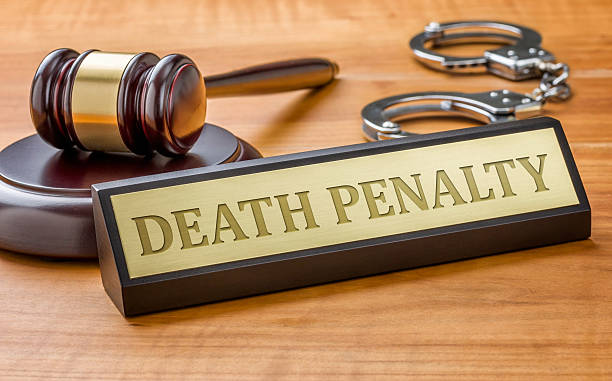
The death penalty or capital punishment as it is often called is the legal sentencing of death against convicted persons by a court of competent jurisdiction. Death sentence is the most serious punishment for any offence and it will not pass unless a competent Court of law has convicted a person for capital offence. In Ogwuche v. F.R.N (2021) 6 NWLR (Pt. 1773) 540 at 559, para. C, the Supreme Court states that: “An offence punishable by the death penalty is a capital offence”. It is usually the punishment that determines whether an offence is termed capital or not. This was further explained by the Supreme Court in Ogwuche v. F.R.N. (supra) thus: “It is the punishment for the offence that determines whether it is a capital offence or not, and not the law pursuant to which the charge is brought”. (P.561, para. H)
The death penalty is a punishment for certain types of offence and until recent times has been a practice in countries around the world. In 1794, the US State of Pennsylvania became the first jurisdiction in the world to restrict the death penalty to first-degree murders and in 1846; the State of Michigan abolished the death penalty for all murders and other common crimes. Venezuela became the first country in the world to completely abolish the death penalty without restrictions to include treason, mutiny and all murders. While Angola, Namibia, Djibouti, and Mozambique became some of the first African countries to abolish the death penalty in the 1990s.
Although the list of countries to have abolished the death penalty continues to increase and is at a staggering seventy per cent, some countries including Nigeria, China, Russia, Malaysia, Congo, Iran, Japan, India and even some States in the United States have retained the death penalty and continue to carry out executions yearly. Notwithstanding that the last execution of a convicted capital offender in Nigeria was in 2016, Nigeria continues to remain a retentionist country as over 3,298 inmates across the custodial centres in the country are on death row.
The death penalty has remained a subject of debate not only in Nigeria but around the globe. Scholars as well as debaters for and against the death penalty have continued to argue the pros and cons of the death penalty. While some argue that the application of the death penalty is justifiable under law, as it aims to serve as a deterrent to crime, others argue that it is inhumane and that the methods used in the execution of the death penalty fall under the list of cruel, inhuman or degrading treatment or punishment (as contained under the Convention against Torture and Other Cruel, Inhuman or Degrading Treatment or Punishment adopted in December 1984 by the United Nations General Assembly).
Constitutionality and Legality of the Death Penalty in Nigeria
In Nigeria, section 33 (1) of the Constitution of the Federal Republic of Nigeria 1999 (as amended) provides an exception to the fundamental right to life of persons found guilty and convicted before the court of law in cases of capital offences. It states: every person has a right to life and no one shall be deprived intentionally of his life, save in the execution of the sentence of a court in respect of a criminal offence of which he has been found guilty in Nigeria.
Based on the foregoing section, a convicted person can be sentenced to death in Nigeria by a court of competent jurisdiction in capital offences such as murder, kidnapping, armed robbery, mutiny, homosexuality, treason and treasonable felonies under the Criminal Code Act Cap C 38 L.F.N 2004 (Sections 37 and 319), Criminal Procedure Act, Penal Code of Northern Nigeria, L.N.N 1963 (Sections 221 and 411), Armed Forces Act a20 2004 (Section 52 sub 1), Robbery and Firearms Acts LFN 2004 (Section 1(2) (3).
The Apex Court in Nigeria recognizes the constitutionality of the death penalty as poignantly held in the case of Amoshima v. State (2011) 14 NWLR (Pt. 1268) 530 Per ONNOGHEN, J.S.C. at page 555 paras. C-F:
“On the sub-issue as to the Constitutionality of the death sentence in Nigeria jurisprudence, it is clear that learned counsel for the appellant has not pointed the court to any provision of the 1999 Constitution which the death sentence is said to be in breach of in practice. It has not been demonstrated to the satisfaction of this court that the death sentence is not recognised by the 1999 Constitution so as to make the imposition of the same unconstitutional. It does not matter what obtains in other jurisdictions and the current global trend as regards the issue of a death sentence. The duty of the court is to declare and apply the law as it is not to make or amend the law. If there is the need to amend the existing law, the duty to do so falls on the Legislature which has so far not acted to the contrary. Nigeria is a sovereign State subject to the provisions of its Constitution and statutes duly enacted by the National Assembly and international treaties domesticated or adopted for use by the National Assembly. It is to the extent of the above position of the law that I hold the considered view that the cases cited and relied upon by learned counsel to the appellant from the United States of America and Uganda are not only irrelevant but of no persuasive authority in our jurisprudence.”
Death Sentence under ACJA 2015
Death sentence/penalty is captured as a legal form of punishment for capital offences under Part 38 of the Administration of Criminal Justice Act 2015. Section 402 (1) of ACJA 2015 provides the procedure for the execution of a convicted person to include hanging by the neck or by lethal injection as capital punishment. Prior to ACJA 2015, the Nigerian law had no provision for the use of lethal injections in the execution of convicted capital offenders and all convictions were done either by use of firing squad or by hanging.
The Inhumane Nature of the Death Sentence
In Onouha Kalu vs. The State 1998 13 NWLR 531, one of the issues raised by the appellant was in relation to the constitutionality of the death penalty as a method of punishment under section 319 (1) of the Criminal Code Law of Lagos State Cap 31, Laws of Lagos State of Nigeria 1973 and how it contravened his rights to dignity of person under section 31 of the CFRN 1979 (which expressly prohibited all forms of torture, degrading and inhuman treatment). Although the Supreme Court upheld the conviction and sentence of death to be constitutional, the question as to whether the method of execution contravened the rights of the appellant to dignity and freedom from degrading and torturous conditions remained vaguely clear.
Notwithstanding the constitutionality of the death sentence in Nigeria and other jurisprudence, the argument as to whether the death sentence is humane remains the proverbial elephant in the room amongst Rights groups and scholars of the subject. In order to fully capture the gruesome picture of the death sentence, one must reflect back to the provisions of section 402 (1) of ACJA 2015 which provides that the method of execution of convicted capital offenders shall include hanging or the use of lethal injection. Though the latter method of execution was introduced as a more humane option to the former (which is a more brutal and painful process), an article by the www.capitalpunishmnetuk.org on March 3, 2016, titled Lethal Injections would give readers a different perspective on this method of execution. In the above-mentioned article, it was stated that three drugs were usually used in the administration of lethal injection; Pancuronium bromide (to cause muscle paralysis and respiratory arrest), Potassium chloride (to stop the heart) and Sodium Thiopental (to induce unconsciousness). The estimated time of death for the procedure was between 5-7mins, in most cases, the procedure lasted for over two hours and was often accompanied by complications and that due to some of the recorded effects of these drugs on the condemned convict (e.g excruciating pain, cardiac arrest, paralysis, panic, recurrent needle pricks in search of a vein), the European Union in 2011 banned its exportation.
Conclusion
Despite the presence and application of the death penalty in Nigerian Law, the rate of capital offences has continued to spiral over the roof; criminals have continued to engage in high-level crimes regardless of the punishment attached to the commission of such offences. It is, therefore, no news that the purpose of attaching death as a punishment for these capital offences as contained in section 401(2) (d) of ACJA 2015 (i.e to serve as a deterrent by making an example of the convict to other aspiring offenders) has failed, thereby reducing the punishment to a vindictive instrument by the State.
Asides from the ineffectiveness of the death penalty as a deterrent to crime, the pronouncement of the death sentence on a convicted person by the court carries with it a sense of finality and hopelessness, in the sense that, a person who believes himself innocent despite the case established against him before the trial court, may give up on the will to appeal the judgement of the court on the basis that all hope is lost for him. It does not help much that the State takes a very long time to execute the sentence in instances where the condemned person has exhausted all appeals, leaving death row inmates under the constant fear and psychological torture of an impending yet uncertain day of death for years.
It is the opinion of this writer that, rather than sentencing convicts to death, the law can be amended to punish convicted capital offenders to life imprisonment with hard labour and to include restrictions on visitations as a more stiffer yet humane punishment as is applicable in abolitionist countries.
DEATH PENALTY AS AN INHUMANE TREATMENT AND THE PROVISION OF SECTION 402 OF ACJA 2015
by
Queenetta Bassey Esq.
by juritrustlaw | Jul 4, 2023 |

A CASE REVIEW OF JUDGEMENT DELIVERED BY THE COURT OF JUSTICE OF THE ECONOMIC COMMUNTIY OF WEST AFRICAN STATES (ECOWAS) AT ABUJA, NIGERIA ON THE 10TH DAY OF JULY 2020, IN SUIT NO ECW/CCJ/APP/53/2018 BETWEEN THE INCORPORATED TRUSTEES OF LAWS AND RIGHTS AWARENESS INTIATIVES (APPLICANT) AND THE FEDERAL REPUBLIC OF NIGERIA (DEFENDANT).
by
Mosunmola Sherifat Ikujuni LL.B (Igbinedion), BL, LLM, M.Phil (Ife),
Magistrate in Ondo State Judiciary Tel. No. 08068381130
The ECOWAS Court of Justice delivered judgment on the 25th of March 2022 in a suit filed by Socio-Economic Rights and Accountability Project (SERAP) against the Nigerian government in Suit No: ECW/CCJ/APP/09/19, on the same subject matter filed by Incorporated Trustees of Laws and Rights Awareness Initiatives. The suit filed by SERAP and Incorporated Trustees of Laws and Rights Awareness Initiatives deals with the applicability of Section 24 of the Cybercrimes (Prohibition, Prevention, Etc.) Act 2015 and that the said Section of the Law infringes on the Fundamental Rights of Nigerians as same is vague, arbitrary, and unlawful.
The Applicant in this instant suit a Non-Governmental Organization (NGO) sued the Defendant (A member state of the Community) for violation of the fundamental rights of freedom of expression of its members, associates and employees under the provision of Articles 1 and 9 of the African Charter on Human and Peoples’ Right and Article 19 of the International Covenant on Civil and Political Rights due to the implementation of Section 24 of the Cybercrimes (Prohibition and Prevention, Etc.) Act 2015 by the Defendant.
The grouse of the Applicant is that Section 24 of the said Act limits the freedom of expression on the internet with the use of any computer devices and imposes fines of N10,0000 (Ten Million Naira) to 25,000,000 (Twenty-Five Million Naira) and makes provision for penal sanction ranging from Three to Ten years imprisonment. That since the enactment of the Act, the Defendant has continuously used the Act to intimidate, harass, Imprison, and torture the Applicant, its members, associates, and employees. The Applicant mentioned some of its members who have been arrested. Some of the arrested members were detained for few hours and released, while some were charged to court and later imprisoned. The Applicant further submits that Section 24 of the Cybercrimes (Prohibition and Prevention, Etc.) Act 2015 provides for the offence of cyber stalking, and that same is vague and has been used severally by the Respondent and its agents to intimidate, harass, and witch hunt anyone that publishes facts criticizing the government or its officials.
It is the case of the Applicant that the continuous execution and application of Section 24 of the Act by the Defendant is a continuous violation of the freedom of expression enshrined in the African Charter on Human and Peoples’ Rights, as well as the Respondent’s obligation under the ECOWAS Revised Treaty. The Applicant further argued that Section 24 of the Cybercrimes Act is unconstitutional as it contravenes the provision of Section 39 of the 1999 Constitution of the Federal Republic of Nigeria. That if this provision of the Act is not repealed or amended, it will completely undermine the rule of law in Nigeria.
The Applicant maintains that Section 24 of the Act contains the word “Offensive” without defining what may amount to offensive. That the degree or limits of what amounts to offensive was not specified thus makes the provision vague, and ambiguous in nature. Section 24 of the Act does not provide safeguards against law enforcement officers who rely on this vague provision of the law to freely exercise their discretionary power by arresting, accusing, prosecuting and/or convicting a person arbitrarily. It is the argument of the Applicant that the sanctions provided in Section 24 of the Act constitute a restriction on the right to freedom of expression that is not established by law, it does not pursue a legitimate objective and they are not necessary nor proportional. The Applicant cited case laws earlier pronounced by the ECOWAS court and other international courts to support its position.
In Conclusion, the Applicant prayed the court to declare that the Defendant’s action in applying the said Section of the Act to detain and arrest the Applicant, members and associates violates their right as provided in Article 9, Paragraphs 1 & 2 of the African Charter on Human and Peoples’ Rights as well as International Law. It further prayed the court to declare that the provisions of Section 24 of the Cybercrimes (Prohibition and Prevention, Etc.) Act 2015 violate Article 9, Paragraphs 1 & 2 of the African Charter on Human and Peoples’ Rights as well as International Law. The Applicant also prayed the Court to declare that the continued application of the said Section of the Act amounts to the Defendant failing to fulfill its obligations under the ECOWAS Revised Treaty and the African Charter on Human and People’s Right. It prayed the court to eliminate the provisions of Section 24 of the Cybercrimes (Prohibition, Prevention, Etc.) Act 2015 from its legislation. The Applicant finally prayed the Court to order a permanent injunction which prevents the Defendant from continuing to give effect to the provisions of the said Section of the Act.
On the other hand, the Defendant submitted that it never intimidated, harassed, jailed nor tortured any member of the press for exercising their freedom of expression within the law including the Applicant’s members, associates, and employees. That it never violated the freedom of expression of any citizen on the internet or anywhere as it always maintained the rule of law. The Defendant maintained that Section 24 of the Cybercrimes (Prohibition, Prevention, Etc.) Act 2015 has never been used as a tool to violate the freedom of expression and the press which is legally guaranteed under the rights of the African Charter on Human and Peoples’ Rights, the ECOWAS Revised treaty and the 1999 Constitution of the Federal Republic of Nigeria (As Amended). That the provisions in Section 24 of the Act deals with acts which the law considers illegal.
It is the argument of the Defendant that the phrase “within the law” mentioned in Article 9(2) of the African Charter on Human and Peoples’ Right means any law that has passed the legal criteria in a democratic society such as passing through a national assembly democratically constituted and approved by the democratically elected President of the country, and that is the exact criterion that Section 24 of the Cybercrimes (Prohibition, Prevention, Etc.) Act 2015 went through before becoming a law in the Federal Republic of Nigeria. The Defendant further states that Section 24 of the said Act provides restrictions that are permitted by law with the purpose of respecting the rights and reputation of others. That the said Section is an integral part of the fundamental rights of others living in the Federal Republic of Nigeria and anything like such adulteration of rights set out in the said section is equivalent to placing restrictions or derogation from those rights.
The Defendant submits that Section 39(3)(a) of the 1999 Constitution (As Amended) provides that the Federal Republic of Nigeria has the power to legislate with the purpose of regulating telephony, wireless transmission, and television. Furthermore Article 45(1)(a)(b) African Charter on Human and Peoples’ Rights provides that Nigeria as an ECOWAS Member State can make laws for the defense, public security, public order, morality, health or to protect other people’s rights and freedom. That such is the purpose for which Section 24 of the Cybercrimes (Prohibition, Prevention Etc.) Act 2015 was enacted as a law in Nigeria to provide a measure against the excesses and abuses resulting from the exercise of the right to freedom of expression legally guaranteed under the Constitution. The Defendant argues further that the Applicant wants the court to interfere in the domestic laws of a member state i.e., Federal Republic of Nigeria and that Section 24 of the Cybercrime (Prohibition and Prevention) Act 2015 is under the domestic laws of Nigeria. The Defendant cited and relied on case laws earlier pronounced by the ECOWAS court.
The Defendant concluded that the Applicant failed in presenting an actionable error committed by the Defendant which would justify to the court the analysis of the reliefs sought by the Applicant. The Defendant further prayed the Court to consider its argument and to dismiss the Applicant’s claim as same is frivolous, incompetent and lacks merit in the light of international and domestic laws.
The Court’s Decision
The Court affirmed its jurisdiction to entertain this case as it borders on the allegation of violation of human rights which is protected by the provisions of Articles 1 and 89 of the African Charter on Human and Peoples Rights (ACHPR) and the International Covenant on Civil and Political Rights (ICCPR). The Court further held that the present case filed by the Applicants is not before another international court hence it is saddled with the competent jurisdiction to hear same. The court concluded that it is competent to examine a law of a Member State where an allegation of human rights violation arises.
The Court in arriving at its final decision considered whether the restrictions on the exercise of freedom of expression imposed by the Respondent through the provision of Section 24 of the Cybercrimes (Prohibition, Prevention, Etc.) Act 2015 are provisions provided for by Law of international standard, whether they pursue legitimate objectives and whether they are necessary and proportionate in achieving the objectives pursued.
The Court in its findings held that it is not enough for restrictions to be established by law, rather such restrictions must be formulated with sufficient precision, that is, it must be sufficiently clear to allow the individual to adapt his conduct to its predictions and still allow the enforcers of the rule to determine which forms of expression are legitimately restricted and the one that are unduly restricted. That the provisions of Section 24 of the Act talk about criminal conduct and defines the applicable sanctions, therefore it must in all ramifications be legally well written and its elements must be clearly defined to avoid any ambiguity in their meanings. Relying on international case laws as well as cases earlier decided by this court on similar matters, this Court further held that when a law does not define the parameters or elements of the crime that it typifies, it therefore cannot pass the test of legality since by its nature it will be arbitrary.
The Court admitted that the expression “grossly offensive” stated in Section 24 of the Act may be subject to varied interpretation. It further notes that some expressions contained in the said Section 24 are shown in a generic way. Such expression includes indecent, obscene, menacing character, annoyance, inconvenience, insult, enmity, ill will or needless anxiety. The Court in its opinion considered the margin of appreciation enjoyed by the Defendant in the definition and prohibition of certain conduct which it qualifies as crimes in its national legislation, and also taking into account that the interpretation of the aforementioned provisions occurs within the scope of the current legal system, this Court is of the view that the provisions in Section 24 of the Act provides adequate information to individuals to adapt to their conduct accordingly. The Court therefore concluded that Section 24 of the Cybercrimes Act meets the” Law” requirement stipulated in Article 9(2) of the African Charter on Human and People’s Rights (ACHPR).
The Court in its findings further held that contrary to Article 19(3) of the International Covenant on Civil and Political Rights (ICCPR), Article 9 of the African Charter on Human and People’s Rights (ACHPR) does not establish a list of legitimate purposes that legitimize restrictions on freedom of expression. However, the general limitation clause contained in Paragraph 2 of Article 27 of the African Charter requires that all rights and freedoms be exercised with due regard to the right of others, collective security, morality, and common interest. This Court therefore held that restrictions on the exercise of the right to freedom of expression can only be based on the reasons provided for in Articles 27(2) of the African Charter and 19(3) of the ICCPR. The Court concluded that the objectives pursued by the provisions of Section 24 of the Act proves to be legitimate, since they fall within the motives provided for in Articles 19(3) of the ICCPR and 27(2) of the ACHPR and aims at safeguarding due regard to the right of others, collective security, morality, and common interest.
The Court also considered whether the restrictions in Section 24 of the Cybercrimes Act are necessary and proportional for the intended purposes. The Court in its findings held that in law, the principle of proportional justice is used to describe the idea that the punishment of a particular criminal offence must be proportional to the seriousness of the criminal offence itself. In other words, the principle of proportionality seeks to determine whether through the action of the Defendant, a fair balance has been achieved between the protection of the rights and freedoms of the individual and the interest of the society. The Court in its findings relied on cases pronounced by the African Court as well as cases decided upon by the European and Inter American Courts. It further relied on No 34 of the General Comments of the Human Rights Committee and cases decided by this same court. This Court noted that the European and Inter-American jurisprudence has pointed out that States should only use criminalization as a last resort and when there is a serious threat to the enjoyment of other human rights. They argue that States should make preferential use of civil procedure rather than criminal procedure. The European and Inter American Jurisprudence reject the penalization of the crime of defamation with imprisonment, considering it disproportionate and in violation of freedom of expression.
In view of the aforementioned, this Court concluded that the provisions of Section 24 of the Cybercrimes Act as regard penal punishments for conducts that it considers offensive are unnecessary in a democratic society as it disproportionately violates the right to freedom of expression guaranteed by Articles 9(2) of ACPHR and 19 of ICCPR.
As regards the Applicant’s claim that since the law came into effect in 2015, the Defendant has religiously used the Act to intimidate the Applicants, its members, associates and employees, the Court noted that the Applicants did not tender any other means of evidence such as the oral testimony and/or witness statements of the alleged victims to corroborate the alleged violations. That the online newspaper clippings tendered by the Applicants are insufficient in discharging the burden of proof required by the law. In other words, the Applicant failed in tendering sufficient evidence in confirming the arrests, imprisonments and to clarify the conditions and motivations underlying them to enable the Court in assessing whether the alleged human rights violations actually occurred. The Court further held that the Applicants failed in proving or convincing the court that the alleged arrests or imprisonment were motivated by the interpretation and application of the provisions of Section 24 of the Cybercrimes (Prohibition, Prevention, Etc.) Act 2015 made by the agents of the Respondent.
In conclusion, the Court held that:
(a) it is competent to examine the cause of action considering that it is admissible.
(b) That the Defendant by adopting the provisions of Section 24 of the Cybercrime (Prohibition and Prevention) Act 2015 violates Article 9(2) of the African Charter on Human and Peoples’ Right and 19(3) of the International Covenant on Civil and Political Rights.
(c) That the Applicant has not proved that the right of its members, associates, and employees to freedom of expression has been violated by the Defendant.
(d) The Court therefore orders the Defendant to repeal or amend Section 24 of the Cybercrime (Prohibition, Prevention, Etc.) Act 2015 in accordance with its obligation under Article 1 of the African Charter on Human and Peoples’ Right and the International Covenant on Civil and Political Rights.
(e). The Court dismisses the other claims of the Applicants.
Analysis
It is trite that the freedom of expression and opinions are rights accruing to every Nigerian Citizen. These rights are provided for in Section 39(1) of the 1999 Constitution (As Amended) which provides that; “Every person shall be entitled to freedom to hold opinions and to receive and impart ideas and information without interference”. Section 45 of the said Constitution further provide restrictions on and derogation from fundamental human rights. The said Section provides that nothing in Sections 37, 38, 39, 40 and 41 of the Constitution shall invalidate any law that is reasonably justifiable in a democratic society in the interest of defence, public safety, public order, public morality or public health; or for the purpose of protecting the rights and freedoms of other person. It therefore means that Section 39 of the 1999 Constitution (As Amended) shall not operate to invalidate any law that is reasonably justifiable in a democratic society in the interest of defence, public safety, public order, public morality or public health; or for the purpose of protecting the rights and freedoms of other persons.
Section 39(1) of the 1999 Constitution (As Amended) entitles a person to freedom of expression and imparting ideas and information, it is however not an absolute right. Such freedom of expression or imparting information must not be utilized or invoked in such a way that would trample upon the rights of other persons in the society. Such a person must not act in a way that would defame another person’s character or endanger their health or morality. In fact, such opinions must not be one that would endanger or be injurious to the society at large. The Constitution further recognizes that if such a person acts to the detriment of others, he can be liable in civil action. However, the Constitution further recognises that if the defamation goes beyond the right of an injured individual but has to do with the society at large then it is appropriate to criminalize such conduct. See the case of AVIOMOH V COP & ANOR (2014) LPELR-23039 CA, PG 15-17, PARAS F-D, PRESIDENT OF THE FEDERAL REPUBLIC OF NIGERIA & ORS V ISA & ORS (2017) 3 NWLR PT 15553 PG 347.
Based on the aforementioned, the Cybercrimes Act was promulgated to protect the rights of the people and the society at large as provided for in the Constitution. Section 24 of the said Act is an integral part of the fundamental rights of others living in the Federal Republic of Nigeria. The objectives sought to be achieved by the Act is provided for in Section 1 of the Act and it includes; (a) to provide an effective and unified legal, regulatory and institutional framework for the prohibition, prevention, detection, prosecution and punishment of cybercrimes in Nigeria; (b) to ensure the protection of critical national information infrastructure; (c) to promote cyber security and the protection of computer systems and networks, electronic communications, data and computer programs, intellectual property and privacy rights. Section 1 of the Cybercrimes Act conveys the determination of the legislature to protect several rights including the privacy rights of the Nigerian Citizens. It is therefore appropriate to state that the purpose for which the Act was enacted is “within the law” since they fall within the motives provided for in Articles 19(3) of the International Covenant on Civil and Political Rights (ICCPR) and 27(2) of the African Charter on Human and Peoples’ Right (ACHPR).
The Applicant alleged that the expression “grossly offensive” is vague and imprecise, and that the said expression allows arbitrary interpretation and application. In other words, Section 24 of the Cybercrimes Act failed in providing what constitutes “grossly offensive”. I agree with the reasoning of the ECOWAS Community Court of Justice that the expression “grossly offensive” may be subject to different interpretation. However, the court noted further that some other expressions contained in the provisions of Section 24 of the Act are shown in a generic way. Expressions used in the said section includes indecent, obscene, menacing character, annoyance, inconvenience, insult, enmity, ill will or needless anxiety. I submit that these expressions have given further meaning on what constitutes “grossly offensive”. I further agree with the decision of the court that the said expression “grossly offensive” as stated in Section 24 of the Act provides adequate information to individuals to adapt to their conduct accordingly. In other words, the expression “grossly offensive” provides sufficient and adequate information for individuals to act cautiously.
The ECOWAS Community Court of Justice in its decision further held that the penal punishment provided for in Section 24 of the Cybercrimes Act is not necessary and proportional in a democratic state. In other words, the punishment and fines provided in the said Section of the Act is not commensurate to the offences committed. The Court relied on international cases laws wherein the international courts frown at criminalizing actions that deals with freedom of expression and opinion but advocates for civil remedies.
I agree with the decision of the ECOWAS Court to the fact that offences committed should be commensurate with the punishment and fines imposed. I further agree with the reasoning of the European and Inter-American jurisprudence that criminalization should be used as a last resort when there is a serious threat or breach to the enjoyment of other human rights or the society at large. In other words, the Nigerian government should adopt civil procedures and make people pay for damages when they are found liable. The penalization of defamation with terms of imprisonment and/or payment of fines as provided by Section 24 of the Cybercrimes Act amounts to a gross violation of the freedom of expression.
I further agree with the reasoning of the ECOWAS Court of Justice as to the fact that the Applicant did not place sufficient evidence in proving to the court how its members were harassed or intimidated, and also not showing that the harassment and intimidation was caused by the provisions of Section 24 of the Cybercrimes (Prohibition, Prevention, Etc.) Act 2015 Act.
It is trite law that he who asserts the existence of a fact must prove same. Therefore, the onus of proof lies on that person who would fail if no evidence were adduced on either side. See Sections 131 and 132 of the Evidence Act 2011 and the cases of TUMBIDO B INEC & ORS (2023) LPELR-60004 SC, PG 42, PARAS A-B, DEMATIC NIG LTD V UTUK & ANOR (2022) LPELR-56868 SC.
Furthermore, a court of law cannot speculate or conjecture on possible facts as it has no jurisdiction to do so. The court cannot go on a wild goose chase to scout or fish for evidence where there is none. A court of law is not permitted by the law to go on a voyage of discovery. The only jurisdiction a court has is to make use of the facts of the case as presented by parties and use same. A court of law cannot do more or less as a Judge is not a soothsayer or a metaphysician. See the case of ORJI V UGOCHUKWU & ORS (2010) LPELR-9136 CA, PG 33-34, PARAS A. Since the Applicant has failed in availing the court with sufficient, cogent, and credible evidence as to how its members, employees etc. were harassed and intimidated, then that relief of the Applicant must also fail.
In an interview granted on the 1st day of April 2023 by the Deputy Director of Socio-Economic Rights and Accountability Project (SERAP) in person of Mr Kolawole Oluwadare, he urged the Nigerian government against reducing the civic space with the usage of the Cybercrimes Act and other repressive laws. It is SERAP’s belief that the immediate enforcement of the ECOWAS judgment would enhance the freedom of press and of speech. It is important to state that the ECOWAS Court of Justice re-echoed in its judgment of 25th of March 2022 in the suit filed by SERAP against the Nigerian Government that Section 24 of the Cybercrimes (Prohibition, Prevention, Etc.) Act 2015 should be amended or repealed as it infringes on the fundamental rights of the Nigerian Citizens.
It is therefore high time for the Nigerian Government to comply with the judgments of the ECOWAS Community Court of Justice in the suits filed by SERAP and Incorporated Trustees of Laws and Rights Awareness Initiative, by amending or repealing the said Section 24 of the Cybercrimes Act as the decision of the said court is final and cannot be appealed against. This is because an order of court must be obeyed at all times. Obedience to order of court is part and parcel of the rule of law which in turn is sine qua non for orderliness and development of democracy in any society. See the case of OGUNLEYE V AINA (2012) LPELR-7877 CA, PG 55-56, PARAS F-D. On the contrary, disobedience to an order of the court is capable of igniting chaos and anarchy in any country. The non-compliance with the Judgment of the ECOWAS Court of Justice can be sanctioned under Article 24 of the Supplementary Protocol of the ECOWAS Court, and Article 77 of the ECOWAS Treaty.