by juritrustlaw | Nov 20, 2026 |
CALL FOR APPLICATIONS: 2ND EDITION JURITRUST CENTRE – ADMINISTRATION OF CRIMINAL JUSTICE ACADEMY NATIONAL MOOT COMPETITION 2026
REGISTRATION DEADLINE EXTENDED!
Applications are open for the 2nd Edition of the Juritrust Centre – Administration of Criminal Justice Academy National Moot Competition 2026, supported by the MacArthur Foundation. Registration opened on 2nd October 2026, and the closing date has now been extended to 11th December 2026.
How to Apply
Don’t miss this opportunity—apply before 11th December 2026!
by juritrustlaw | Apr 28, 2026 |
Introduction
The landmark decision in Comrade Austin Osakwe v. Edo Agency for the Control of AIDS (2018) SC/614/2018 represents a watershed moment in Nigeria’s legal and democratic evolution. Central to the ruling is the interpretation and national application of the Freedom of Information Act (FOIA), 2011, a statute designed to facilitate public access to information, enhance transparency, and promote accountability in governance. The case affirmed the federal reach of the FOIA, ensuring its applicability to state agencies, and thereby embedding transparency and good governance as constitutional cornerstones of Nigeria’s democracy.
1. Federalization of the Freedom of Information Act (FOIA)
A central legal question was whether the FOIA, a federal statute, applies to state-level institutions in the absence of state-enacted versions of the law. The court answered in the affirmative, ruling that the FOIA is applicable throughout the Federation, including state government agencies like the Edo State Agency for the Control of AIDS.
The court relied on Section 4(5) of the 1999 Constitution of the Federal Republic of Nigeria (as amended), which provides that where there is a conflict between a federal and state law on matters in the concurrent list, the federal law prevails. The ruling thereby affirmed the principle that the National Assembly had “covered the field” on the matter of public access to information, making conflicting state laws inoperative.
2. Strengthening Transparency and Accountability
By applying the FOIA to state institutions, the judgment enhanced the legal mechanisms available to citizens, media, and civil society for scrutinizing public actions. This extension ensures that public bodies at all levels are subject to the same standards of openness, thereby reducing bureaucratic opacity and increasing institutional accountability.
Importantly, the decision empowers individuals to obtain information critical to public welfare—particularly in areas like public health, education, and environmental governance—without undue restriction from state-level gatekeeping.
3. Clarification of the Doctrine of Covering the Field
The case also clarified the doctrine of “covering the field”, a principle under Nigerian federalism that addresses legislative conflicts between federal and state laws. Where the National Assembly enacts a comprehensive legal framework on a matter within the concurrent list, any inconsistent state legislation is rendered void to the extent of the inconsistency.
In this case, the FOIA was deemed a comprehensive federal enactment, and thus, any contradictory or absent state law cannot exclude state institutions from its application. This clarification promotes legal uniformity across Nigeria’s complex federal structure and helps reduce the friction caused by jurisdictional overlaps.
4. Promotion of Good Governance and Human Rights
The ruling aligns with the constitutional goals of promoting good governance and protecting fundamental human rights. Section 15(5) of the 1999 Constitution obliges the Nigerian state to “abolish all corrupt practices and abuse of power”. Transparency, as facilitated by the FOIA, is a critical tool in achieving this objective.
Furthermore, access to information is recognized as a fundamental human right under international legal instruments such as the International Covenant on Civil and Political Rights (ICCPR) and the African Charter on Human and Peoples’ Rights, both of which Nigeria is a party to. The court’s decision harmonizes Nigerian domestic law with these international obligations, thus reinforcing the rule of law and democratic accountability.
5. Setting a Judicial Precedent
Beyond its immediate impact, the decision sets a robust judicial precedent for interpreting the FOIA and similar federal laws. It establishes a legal framework for future disputes concerning state-level compliance with federally enacted transparency laws.
By confirming that courts will enforce compliance with constitutional and statutory transparency obligations, the judgment strengthens judicial oversight and reinforces the role of the judiciary as the guardian of democratic governance and civil liberties.
Conclusion
The decision in Comrade Austin Osakwe v. Edo Agency for the Control of AIDS is a landmark affirmation of the applicability of the FOIA across Nigeria’s federal structure. By extending the FOIA to state-level agencies, the court fortified transparency, reinforced the doctrine of covering the field, and promoted good governance. It serves not only as a victory for constitutional supremacy and democratic accountability but also as a precedent for future legal interpretations of federal laws with nationwide implications.
James Iwuchukwu is a legal practitioner based in Ibadan, Oyo State. He can be reached on iwuchukwujames582@yahoo.com
NOTE: The section on legal Briefs is a forum for frank and open scholarly notes by research staff and guest contributors. Views expressed in these notes are personal to the authors and are not to be attributed to the Centre.
DO YOU WANT TO SHARE YOUR VIEWS ON OUR BLOG?
JURITRUST Centre for Socio Legal Research and Documentation invites submission of short articles from VOLUNTEER CONTRIBUTORS who are interested in sharing their perspectives on salient issues in the administration and development of the Nigerian Criminal Justice System, comparative systems and related issues. CLICK HERE find out how to send us your articles. Thank you
by juritrustlaw | Dec 2, 2025 |
 CALL FOR PROPOSALS
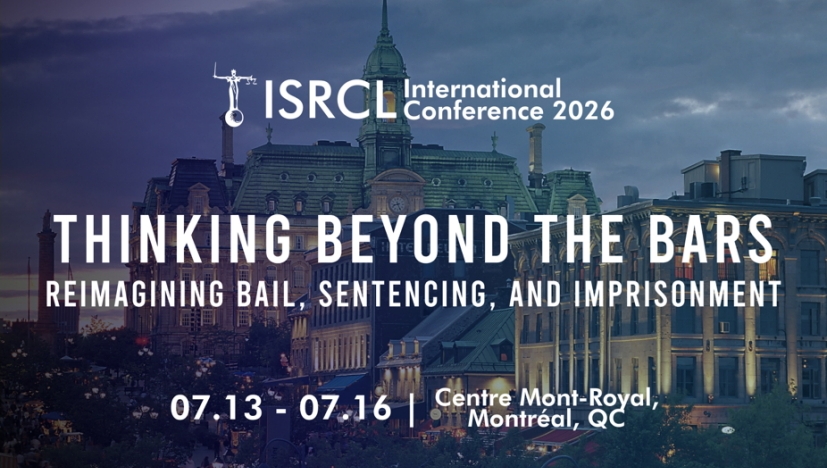
The Planning Committee is now accepting proposals for presentations on this year’s conference theme: “Thinking Beyond the Bars: Reimagining Bail, Sentencing, and Imprisonment.”
We invite proposals on topics including:
- Bail reform and pretrial justice
- Sentencing alternatives and guidelines
- Prison conditions and rehabilitation
- Decarceration strategies
- Restorative justice approaches
- Any related topics within the conference theme
Submission Deadline: March 1, 2026
To submit a proposal, please provide a short abstract for consideration by the Committee.
SUBMIT YOUR PROPOSAL HERE
Conference Details
Dates: July 13-16, 2026
Location: Centre Mont-Royal, Montréal, Quebec
Registration & More Information
For information on registration fees and discounted group accommodation rates, please visit:
REGISTRATION & MORE INFORMATION
About the ISRCL
The International Society for the Reform of Criminal Law is an international, non-governmental association of judges, legislators, lawyers, academics, government officials, police and corrections professionals who have come together to work actively on the administration of criminal justice, both in their own jurisdictions and internationally.
Membership
By forming networks, associations and most importantly, friendships, we continue to work together to bring reform to the criminal law in order to achieve fair and just societies for all the citizens of our members’ jurisdictions. We welcome you to join the Society by purchasing a membership today. The memberships are variable, and the various categories are set on our website http://www.isrcl.com/membership.
BECOME A MEMBER