Brief Overview
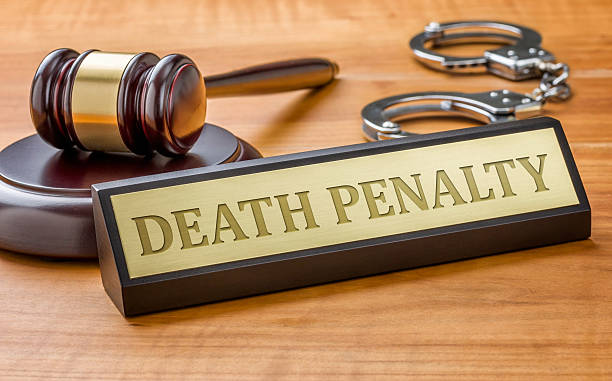
The death penalty or capital punishment as it is often called is the legal sentencing of death against convicted persons by a court of competent jurisdiction. Death sentence is the most serious punishment for any offence and it will not pass unless a competent Court of law has convicted a person for capital offence. In Ogwuche v. F.R.N (2021) 6 NWLR (Pt. 1773) 540 at 559, para. C, the Supreme Court states that: “An offence punishable by the death penalty is a capital offence”. It is usually the punishment that determines whether an offence is termed capital or not. This was further explained by the Supreme Court in Ogwuche v. F.R.N. (supra) thus: “It is the punishment for the offence that determines whether it is a capital offence or not, and not the law pursuant to which the charge is brought”. (P.561, para. H)
The death penalty is a punishment for certain types of offence and until recent times has been a practice in countries around the world. In 1794, the US State of Pennsylvania became the first jurisdiction in the world to restrict the death penalty to first-degree murders and in 1846; the State of Michigan abolished the death penalty for all murders and other common crimes. Venezuela became the first country in the world to completely abolish the death penalty without restrictions to include treason, mutiny and all murders. While Angola, Namibia, Djibouti, and Mozambique became some of the first African countries to abolish the death penalty in the 1990s.
Although the list of countries to have abolished the death penalty continues to increase and is at a staggering seventy per cent, some countries including Nigeria, China, Russia, Malaysia, Congo, Iran, Japan, India and even some States in the United States have retained the death penalty and continue to carry out executions yearly. Notwithstanding that the last execution of a convicted capital offender in Nigeria was in 2016, Nigeria continues to remain a retentionist country as over 3,298 inmates across the custodial centres in the country are on death row.
The death penalty has remained a subject of debate not only in Nigeria but around the globe. Scholars as well as debaters for and against the death penalty have continued to argue the pros and cons of the death penalty. While some argue that the application of the death penalty is justifiable under law, as it aims to serve as a deterrent to crime, others argue that it is inhumane and that the methods used in the execution of the death penalty fall under the list of cruel, inhuman or degrading treatment or punishment (as contained under the Convention against Torture and Other Cruel, Inhuman or Degrading Treatment or Punishment adopted in December 1984 by the United Nations General Assembly).
Constitutionality and Legality of the Death Penalty in Nigeria
In Nigeria, section 33 (1) of the Constitution of the Federal Republic of Nigeria 1999 (as amended) provides an exception to the fundamental right to life of persons found guilty and convicted before the court of law in cases of capital offences. It states: every person has a right to life and no one shall be deprived intentionally of his life, save in the execution of the sentence of a court in respect of a criminal offence of which he has been found guilty in Nigeria.
Based on the foregoing section, a convicted person can be sentenced to death in Nigeria by a court of competent jurisdiction in capital offences such as murder, kidnapping, armed robbery, mutiny, homosexuality, treason and treasonable felonies under the Criminal Code Act Cap C 38 L.F.N 2004 (Sections 37 and 319), Criminal Procedure Act, Penal Code of Northern Nigeria, L.N.N 1963 (Sections 221 and 411), Armed Forces Act a20 2004 (Section 52 sub 1), Robbery and Firearms Acts LFN 2004 (Section 1(2) (3).
The Apex Court in Nigeria recognizes the constitutionality of the death penalty as poignantly held in the case of Amoshima v. State (2011) 14 NWLR (Pt. 1268) 530 Per ONNOGHEN, J.S.C. at page 555 paras. C-F:
“On the sub-issue as to the Constitutionality of the death sentence in Nigeria jurisprudence, it is clear that learned counsel for the appellant has not pointed the court to any provision of the 1999 Constitution which the death sentence is said to be in breach of in practice. It has not been demonstrated to the satisfaction of this court that the death sentence is not recognised by the 1999 Constitution so as to make the imposition of the same unconstitutional. It does not matter what obtains in other jurisdictions and the current global trend as regards the issue of a death sentence. The duty of the court is to declare and apply the law as it is not to make or amend the law. If there is the need to amend the existing law, the duty to do so falls on the Legislature which has so far not acted to the contrary. Nigeria is a sovereign State subject to the provisions of its Constitution and statutes duly enacted by the National Assembly and international treaties domesticated or adopted for use by the National Assembly. It is to the extent of the above position of the law that I hold the considered view that the cases cited and relied upon by learned counsel to the appellant from the United States of America and Uganda are not only irrelevant but of no persuasive authority in our jurisprudence.”
Death Sentence under ACJA 2015
Death sentence/penalty is captured as a legal form of punishment for capital offences under Part 38 of the Administration of Criminal Justice Act 2015. Section 402 (1) of ACJA 2015 provides the procedure for the execution of a convicted person to include hanging by the neck or by lethal injection as capital punishment. Prior to ACJA 2015, the Nigerian law had no provision for the use of lethal injections in the execution of convicted capital offenders and all convictions were done either by use of firing squad or by hanging.
The Inhumane Nature of the Death Sentence
In Onouha Kalu vs. The State 1998 13 NWLR 531, one of the issues raised by the appellant was in relation to the constitutionality of the death penalty as a method of punishment under section 319 (1) of the Criminal Code Law of Lagos State Cap 31, Laws of Lagos State of Nigeria 1973 and how it contravened his rights to dignity of person under section 31 of the CFRN 1979 (which expressly prohibited all forms of torture, degrading and inhuman treatment). Although the Supreme Court upheld the conviction and sentence of death to be constitutional, the question as to whether the method of execution contravened the rights of the appellant to dignity and freedom from degrading and torturous conditions remained vaguely clear.
Notwithstanding the constitutionality of the death sentence in Nigeria and other jurisprudence, the argument as to whether the death sentence is humane remains the proverbial elephant in the room amongst Rights groups and scholars of the subject. In order to fully capture the gruesome picture of the death sentence, one must reflect back to the provisions of section 402 (1) of ACJA 2015 which provides that the method of execution of convicted capital offenders shall include hanging or the use of lethal injection. Though the latter method of execution was introduced as a more humane option to the former (which is a more brutal and painful process), an article by the www.capitalpunishmnetuk.org on March 3, 2016, titled Lethal Injections would give readers a different perspective on this method of execution. In the above-mentioned article, it was stated that three drugs were usually used in the administration of lethal injection; Pancuronium bromide (to cause muscle paralysis and respiratory arrest), Potassium chloride (to stop the heart) and Sodium Thiopental (to induce unconsciousness). The estimated time of death for the procedure was between 5-7mins, in most cases, the procedure lasted for over two hours and was often accompanied by complications and that due to some of the recorded effects of these drugs on the condemned convict (e.g excruciating pain, cardiac arrest, paralysis, panic, recurrent needle pricks in search of a vein), the European Union in 2011 banned its exportation.
Conclusion
Despite the presence and application of the death penalty in Nigerian Law, the rate of capital offences has continued to spiral over the roof; criminals have continued to engage in high-level crimes regardless of the punishment attached to the commission of such offences. It is, therefore, no news that the purpose of attaching death as a punishment for these capital offences as contained in section 401(2) (d) of ACJA 2015 (i.e to serve as a deterrent by making an example of the convict to other aspiring offenders) has failed, thereby reducing the punishment to a vindictive instrument by the State.
Asides from the ineffectiveness of the death penalty as a deterrent to crime, the pronouncement of the death sentence on a convicted person by the court carries with it a sense of finality and hopelessness, in the sense that, a person who believes himself innocent despite the case established against him before the trial court, may give up on the will to appeal the judgement of the court on the basis that all hope is lost for him. It does not help much that the State takes a very long time to execute the sentence in instances where the condemned person has exhausted all appeals, leaving death row inmates under the constant fear and psychological torture of an impending yet uncertain day of death for years.
It is the opinion of this writer that, rather than sentencing convicts to death, the law can be amended to punish convicted capital offenders to life imprisonment with hard labour and to include restrictions on visitations as a more stiffer yet humane punishment as is applicable in abolitionist countries.
DEATH PENALTY AS AN INHUMANE TREATMENT AND THE PROVISION OF SECTION 402 OF ACJA 2015
by
Queenetta Bassey Esq.