by juritrustlaw | Nov 20, 2026 |
CALL FOR APPLICATIONS: 2ND EDITION JURITRUST CENTRE – ADMINISTRATION OF CRIMINAL JUSTICE ACADEMY NATIONAL MOOT COMPETITION 2026
REGISTRATION DEADLINE EXTENDED!
Applications are open for the 2nd Edition of the Juritrust Centre – Administration of Criminal Justice Academy National Moot Competition 2026, supported by the MacArthur Foundation. Registration opened on 2nd October 2026, and the closing date has now been extended to 11th December 2026.
How to Apply
Don’t miss this opportunity—apply before 11th December 2026!
by juritrustlaw | Jul 11, 2026 |
With the commencement of the 2026 Supreme Court Mandatory Upload of Electronic Copies of Court Processes, the judiciary is enforcing a new standard of efficiency. Understanding the technical nuances—from hyperlinked tables of contents to critical syntax rules—is essential for every lawyer appearing before the Supreme Court. Our summary outlines the path to compliance.
Download Copies Below.
Click here to download THE SUPREME 2026 PD Summary.
Click here to download Mandatory Electronic Upload PD
by juritrustlaw | Dec 2, 2025 |
 CALL FOR PROPOSALS
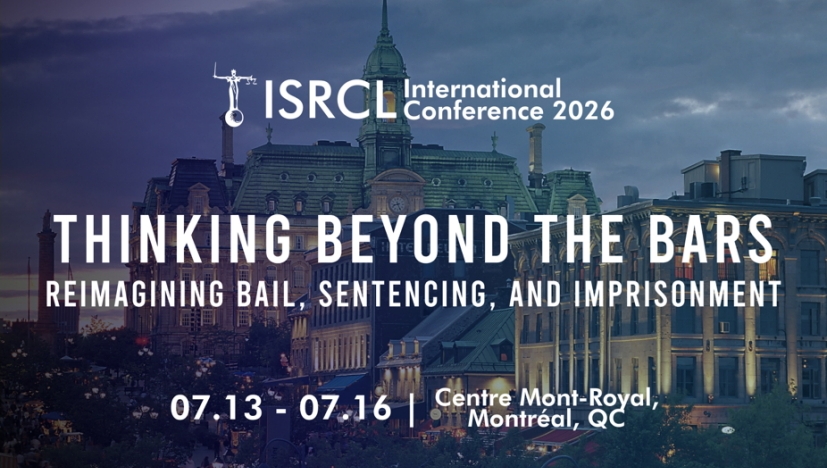
The Planning Committee is now accepting proposals for presentations on this year’s conference theme: “Thinking Beyond the Bars: Reimagining Bail, Sentencing, and Imprisonment.”
We invite proposals on topics including:
- Bail reform and pretrial justice
- Sentencing alternatives and guidelines
- Prison conditions and rehabilitation
- Decarceration strategies
- Restorative justice approaches
- Any related topics within the conference theme
Submission Deadline: March 1, 2026
To submit a proposal, please provide a short abstract for consideration by the Committee.
SUBMIT YOUR PROPOSAL HERE
Conference Details
Dates: July 13-16, 2026
Location: Centre Mont-Royal, Montréal, Quebec
Registration & More Information
For information on registration fees and discounted group accommodation rates, please visit:
REGISTRATION & MORE INFORMATION
About the ISRCL
The International Society for the Reform of Criminal Law is an international, non-governmental association of judges, legislators, lawyers, academics, government officials, police and corrections professionals who have come together to work actively on the administration of criminal justice, both in their own jurisdictions and internationally.
Membership
By forming networks, associations and most importantly, friendships, we continue to work together to bring reform to the criminal law in order to achieve fair and just societies for all the citizens of our members’ jurisdictions. We welcome you to join the Society by purchasing a membership today. The memberships are variable, and the various categories are set on our website http://www.isrcl.com/membership.
BECOME A MEMBER

by juritrustlaw | Dec 19, 2024 |
The Prosecutor of the International Criminal Court, Mr. Karim A.A. Khan KC, is pleased to invite a second round of comments on a new policy initiative by the Office of the Prosecutor to advance accountability for environmental crimes under the Rome Statute.
The initiative will culminate in a new comprehensive policy paper that aims to guide the Office in ensuring a systematic approach to dealing with environmental crimes from the outset of the preliminary examination process to investigations and prosecutions.
The new policy will seek to further promote accountability, transparency, and predictability in the work of the Office in this crucial area. Developed on the basis of the Rome Statute, other regulatory instruments of the Court, applicable treaties, and the principles and rules of international law, the policy will also draw on the jurisprudence of the Court and other relevant jurisdictions in seeking to clarify the existing framework within which the Office may take action in this area. Emphasis will also be placed on how the Office can engage with and support national authorities to ensure a collective, effective approach to environmental crimes within the framework of the Rome Statute.
The initiative was launched in February 2024 and has already benefited from an initial round of more than 80 submissions received prior to the drafting process. This new round of consultations aims to solicit more specific and focused feedback on the text of the draft policy itself.
In highlighting the potential importance of the environmental crimes policy and the central role of stakeholder consultation in its development, Prosecutor Khan stated: “The natural environment forms the bedrock for human life. Our investigations in various regions of the world reveal a pattern: serious international crimes are often driven by or result in significant environmental damage, such as the poisoning of wells and water supplies in Darfur. This is why my Office is developing a policy on how it can harness the treaty that created the Court, the Rome Statute, to address such crimes and to support national authorities in doing the same. We need your input to shape this policy.”
Professor Kevin Jon Heller, Special Adviser to the Prosecutor on War Crimes, will be assisting the Prosecutor and the Office in developing the policy.
The current draft of the environmental crimes policy is available to download HERE.
Comments should be sent to otpecpolicy@icc-cpi.intno later than 23:59 (CET) on 21 February 2025. All input received by this date will be carefully considered in the internal review and revision process.
by juritrustlaw | Sep 2, 2024 |
Artificial Intelligence (AI) has become an integral part of our lives, but its impact on society, particularly in combating corruption, remains a complex issue. While AI offers immense potential to enhance transparency and accountability, it also raises concerns about bias, privacy, and the lack of adequate regulations.
The European Union AI Act stands out as a notable exception in the global landscape of AI governance. Many jurisdictions lack specific regulations governing the development and deployment of AI systems, leaving significant gaps in accountability and oversight. However, even with regulations in place, responsible AI requires more than just governance. It must incorporate cultural and linguistic diversity to ensure that AI systems are fair and equitable.
One of the most pressing concerns is the limited mechanisms for human rights protection in AI systems. There is a risk that AI-powered decision-making can perpetuate or amplify existing biases and discrimination. Moreover, the lack of comprehensive impact assessments for AI systems means that we often have limited understanding of their potential consequences.
Safety, accuracy, and security are also critical issues in AI development. International cooperation is essential to address these challenges and ensure that AI systems are developed and deployed responsibly.
In Nigeria, the development and application of AI present unique opportunities and challenges. Academic institutions play a crucial role in shaping the future of AI by incorporating Nigerian values into AI systems. However, it is important to recognize that data is not neutral. Bias can be introduced into AI systems through the engineering of data, potentially leading to unfair or discriminatory outcomes.
Awarri, Nigeria’s first Large Language Multilingual Model, represents a significant milestone in the country’s AI landscape. With a growing team and extensive data collection efforts, Awarri has the potential to contribute to various applications, including language processing, translation, and information retrieval.
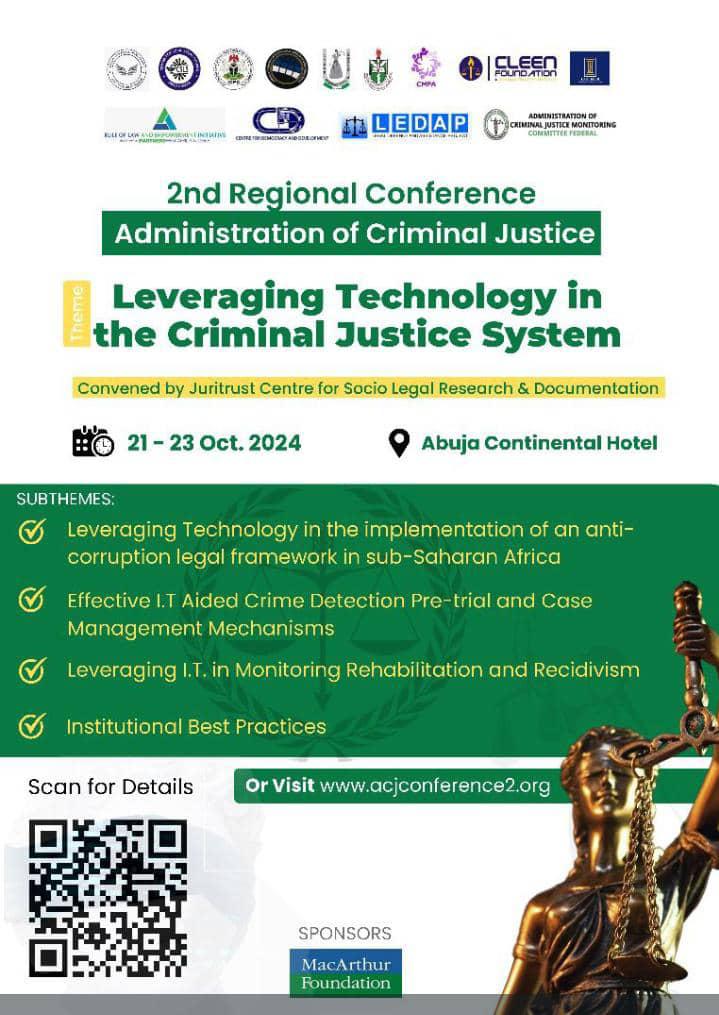
As AI continues to evolve, it is imperative to prioritize privacy and security. Protecting our right to privacy in the age of AI requires a concerted effort from individuals, organizations, and governments. Accordingly, the Juritrust Center for Socio-Legal Research and Documentation, in collaboration with other entities, is organising the 2nd Regional Conference on Administration of Criminal Justice with the theme: Leveraging Technology in the Criminal Justice System.
Slated for 21st, 22nd and 23rd of October, 2024 in Abuja, the conference seeks to offer insights into latest AI advancements in criminal justice administration while addressing these sub-themes:
- Leveraging Technology in the Implementation of an Anti-Corruption Legal Framework in Sub-Saharan Africa
- Effective Crime Detection and Investigation Mechanisms
- Effective Pre-Trial Measures in Criminal Proceedings
- Monitoring Rehabilitation and Recidivism
- Institutional Best Practices
Unarguably, AI has the potential to revolutionise the criminal justice system, providing innovative solutions to longstanding challenges. By leveraging AI technologies in areas such as anti-corruption, crime detection, pre-trial measures, rehabilitation, and institutional best practices, it is possible to create a more just, equitable, and corruption-free society.
Ifeanyi Kevin Ewuziem
by juritrustlaw | Jul 25, 2024 |
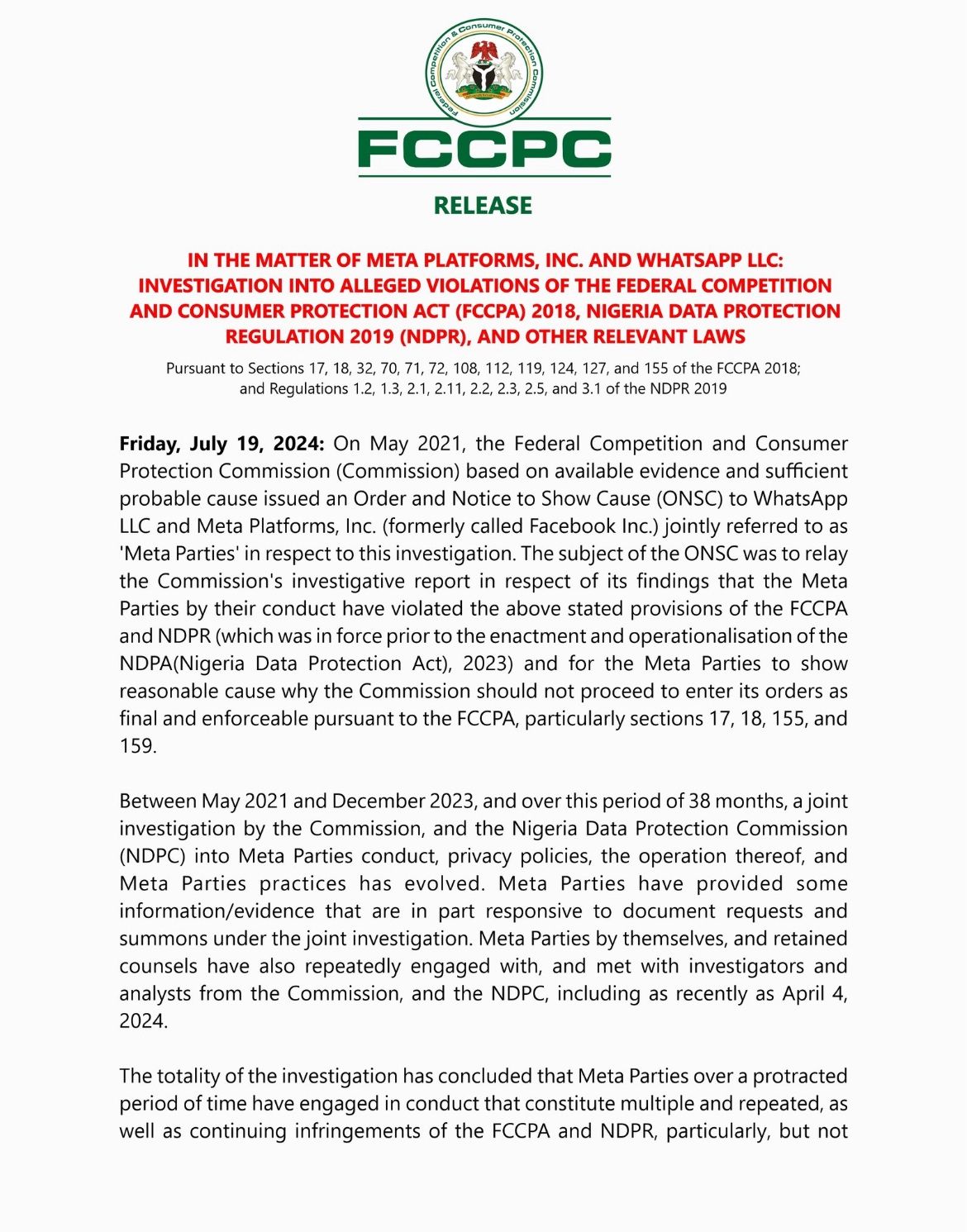
WhatsApp updated its privacy policy in 2021. It was determined to be a pre-ticked box mandating, Nigerian data subjects to either accept the updated privacy policy or not have access to the service; denying Nigerian data subject the right to self determine the collection, use, processing and sharing of their data to Facebook and other 3rd parties.
The Privacy Policy allowed Meta parties profile for marketing purposes Nigerian data subjects with out appropriate consent by data subjects. Nigerian data subjects unlike their European counterparts are unable to withdraw their consent, contrary to the Nigerian data protection regulation which is similar in word and substance to the GDPR applicable in Europe WhatsApp’s updated privacy policy allowed Meta to tie personal data from its WhatsApp service market to improve its dominance in its Facebook service market The FCCPC found that the Meta parties’ conduct was an abuse of dominance., discriminatory and exploitative.
News release from FCCPC .