Artificial Intelligence (AI) has become an integral part of our lives, but its impact on society, particularly in combating corruption, remains a complex issue. While AI offers immense potential to enhance transparency and accountability, it also raises concerns about bias, privacy, and the lack of adequate regulations.
The European Union AI Act stands out as a notable exception in the global landscape of AI governance. Many jurisdictions lack specific regulations governing the development and deployment of AI systems, leaving significant gaps in accountability and oversight. However, even with regulations in place, responsible AI requires more than just governance. It must incorporate cultural and linguistic diversity to ensure that AI systems are fair and equitable.
One of the most pressing concerns is the limited mechanisms for human rights protection in AI systems. There is a risk that AI-powered decision-making can perpetuate or amplify existing biases and discrimination. Moreover, the lack of comprehensive impact assessments for AI systems means that we often have limited understanding of their potential consequences.
Safety, accuracy, and security are also critical issues in AI development. International cooperation is essential to address these challenges and ensure that AI systems are developed and deployed responsibly.
In Nigeria, the development and application of AI present unique opportunities and challenges. Academic institutions play a crucial role in shaping the future of AI by incorporating Nigerian values into AI systems. However, it is important to recognize that data is not neutral. Bias can be introduced into AI systems through the engineering of data, potentially leading to unfair or discriminatory outcomes.
Awarri, Nigeria’s first Large Language Multilingual Model, represents a significant milestone in the country’s AI landscape. With a growing team and extensive data collection efforts, Awarri has the potential to contribute to various applications, including language processing, translation, and information retrieval.
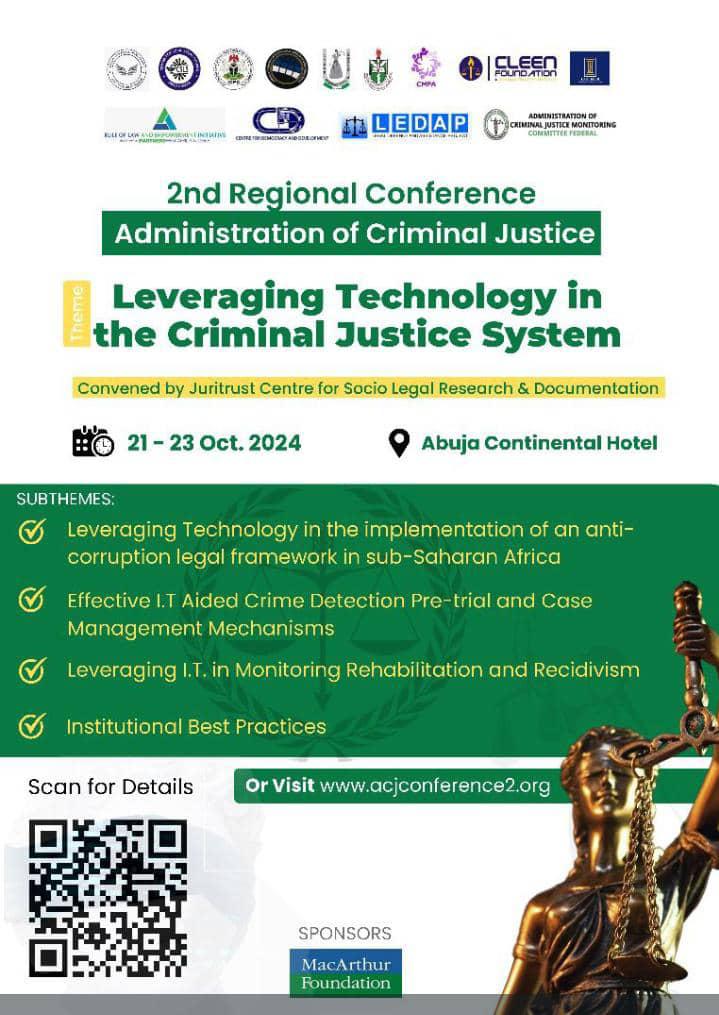
As AI continues to evolve, it is imperative to prioritize privacy and security. Protecting our right to privacy in the age of AI requires a concerted effort from individuals, organizations, and governments. Accordingly, the Juritrust Center for Socio-Legal Research and Documentation, in collaboration with other entities, is organising the 2nd Regional Conference on Administration of Criminal Justice with the theme: Leveraging Technology in the Criminal Justice System.
Slated for 21st, 22nd and 23rd of October, 2024 in Abuja, the conference seeks to offer insights into latest AI advancements in criminal justice administration while addressing these sub-themes:
- Leveraging Technology in the Implementation of an Anti-Corruption Legal Framework in Sub-Saharan Africa
- Effective Crime Detection and Investigation Mechanisms
- Effective Pre-Trial Measures in Criminal Proceedings
- Monitoring Rehabilitation and Recidivism
- Institutional Best Practices
Unarguably, AI has the potential to revolutionise the criminal justice system, providing innovative solutions to longstanding challenges. By leveraging AI technologies in areas such as anti-corruption, crime detection, pre-trial measures, rehabilitation, and institutional best practices, it is possible to create a more just, equitable, and corruption-free society.
Ifeanyi Kevin Ewuziem