by juritrustlaw | Apr 28, 2026 |
Introduction
The landmark decision in Comrade Austin Osakwe v. Edo Agency for the Control of AIDS (2018) SC/614/2018 represents a watershed moment in Nigeria’s legal and democratic evolution. Central to the ruling is the interpretation and national application of the Freedom of Information Act (FOIA), 2011, a statute designed to facilitate public access to information, enhance transparency, and promote accountability in governance. The case affirmed the federal reach of the FOIA, ensuring its applicability to state agencies, and thereby embedding transparency and good governance as constitutional cornerstones of Nigeria’s democracy.
1. Federalization of the Freedom of Information Act (FOIA)
A central legal question was whether the FOIA, a federal statute, applies to state-level institutions in the absence of state-enacted versions of the law. The court answered in the affirmative, ruling that the FOIA is applicable throughout the Federation, including state government agencies like the Edo State Agency for the Control of AIDS.
The court relied on Section 4(5) of the 1999 Constitution of the Federal Republic of Nigeria (as amended), which provides that where there is a conflict between a federal and state law on matters in the concurrent list, the federal law prevails. The ruling thereby affirmed the principle that the National Assembly had “covered the field” on the matter of public access to information, making conflicting state laws inoperative.
2. Strengthening Transparency and Accountability
By applying the FOIA to state institutions, the judgment enhanced the legal mechanisms available to citizens, media, and civil society for scrutinizing public actions. This extension ensures that public bodies at all levels are subject to the same standards of openness, thereby reducing bureaucratic opacity and increasing institutional accountability.
Importantly, the decision empowers individuals to obtain information critical to public welfare—particularly in areas like public health, education, and environmental governance—without undue restriction from state-level gatekeeping.
3. Clarification of the Doctrine of Covering the Field
The case also clarified the doctrine of “covering the field”, a principle under Nigerian federalism that addresses legislative conflicts between federal and state laws. Where the National Assembly enacts a comprehensive legal framework on a matter within the concurrent list, any inconsistent state legislation is rendered void to the extent of the inconsistency.
In this case, the FOIA was deemed a comprehensive federal enactment, and thus, any contradictory or absent state law cannot exclude state institutions from its application. This clarification promotes legal uniformity across Nigeria’s complex federal structure and helps reduce the friction caused by jurisdictional overlaps.
4. Promotion of Good Governance and Human Rights
The ruling aligns with the constitutional goals of promoting good governance and protecting fundamental human rights. Section 15(5) of the 1999 Constitution obliges the Nigerian state to “abolish all corrupt practices and abuse of power”. Transparency, as facilitated by the FOIA, is a critical tool in achieving this objective.
Furthermore, access to information is recognized as a fundamental human right under international legal instruments such as the International Covenant on Civil and Political Rights (ICCPR) and the African Charter on Human and Peoples’ Rights, both of which Nigeria is a party to. The court’s decision harmonizes Nigerian domestic law with these international obligations, thus reinforcing the rule of law and democratic accountability.
5. Setting a Judicial Precedent
Beyond its immediate impact, the decision sets a robust judicial precedent for interpreting the FOIA and similar federal laws. It establishes a legal framework for future disputes concerning state-level compliance with federally enacted transparency laws.
By confirming that courts will enforce compliance with constitutional and statutory transparency obligations, the judgment strengthens judicial oversight and reinforces the role of the judiciary as the guardian of democratic governance and civil liberties.
Conclusion
The decision in Comrade Austin Osakwe v. Edo Agency for the Control of AIDS is a landmark affirmation of the applicability of the FOIA across Nigeria’s federal structure. By extending the FOIA to state-level agencies, the court fortified transparency, reinforced the doctrine of covering the field, and promoted good governance. It serves not only as a victory for constitutional supremacy and democratic accountability but also as a precedent for future legal interpretations of federal laws with nationwide implications.
James Iwuchukwu is a legal practitioner based in Ibadan, Oyo State. He can be reached on iwuchukwujames582@yahoo.com
NOTE: The section on legal Briefs is a forum for frank and open scholarly notes by research staff and guest contributors. Views expressed in these notes are personal to the authors and are not to be attributed to the Centre.
DO YOU WANT TO SHARE YOUR VIEWS ON OUR BLOG?
JURITRUST Centre for Socio Legal Research and Documentation invites submission of short articles from VOLUNTEER CONTRIBUTORS who are interested in sharing their perspectives on salient issues in the administration and development of the Nigerian Criminal Justice System, comparative systems and related issues. CLICK HERE find out how to send us your articles. Thank you

by juritrustlaw | Nov 21, 2024 |
By Benson Chinedu Olugbuo, PhD
Under the 1999 Constitution (as amended or altered) of the Federal Republic of Nigeria, Item 32 Part 1 of the Second Schedule lists out items on the exclusive legislative list with an exception that gives a State House of Assembly (SHoA) the power to make laws that confer body corporate on organisations registered at the subnational level.
Despite different arguments and counter arguments, the wording of Item 32 Part 1 of the Second Schedule 1999 Constitution is very clear and there is no ambiguity.
The item states ‘Incorporation, regulation and winding up of bodies corporate, other than co-operative societies, local government councils and bodies corporate established directly by any Law enacted by a House of Assembly of a State.’
The intention of the drafters of the 1999 Constitution and previous constitutions since 1963 is that a law validly made by a SHoA to confer body corporate on an organization is not within the exclusive jurisdiction of the National Assembly under the exclusive legislative list.
A good example is Item 45 of Second Schedule under the Exclusive Legislative List of the 1999 Constitution (as amended or altered) which provides for, “Police and other government security services established by law.”
This has not affected other policing structures like the Western Nigeria Security Network (Operation Amotekun), Eastern Nigeria Security Network (Ebubeagu) Kano State Hisbah Corps, Anambra Vigilante Services, e.t.c. set-up by different states to complement the activities of the Nigeria Police Force and other security agencies operating in Nigeria.
Currently, there is a Bill for an Act to alter the provision of the 1999 Constitution of the Federal Republic of Nigeria to provide for the establishment of state police and other related matters before the National Assembly which will involve moving police under Item 45 from exclusive to concurrent legislative list.
To drive home this point, it is pertinent to note that the decision of the Court of Appeal sitting in Jos delivered on Tuesday 17th February 1998 in the case of S.S. Ejikeme & 3 Others Vs. N.J. Amaechi & 5 Others (1998: 5 Nigeria Weekly Law Report (Part 542) 456) is very important here.
The Court relied on Section 10 of the Benue State Voluntary Associations Registration Law (VARL) of 1988 to state that the law validly confers body corporate to the Igbo Community, Katsina Ala registered under the VARL law.
Therefore, the Court of Appeal decided that the respondents did not have the locus standi to sue without first obtaining the leave of the organization to approach the court at the first instance. Section 10 of the Benue State VARL (1988) provides that; “The registration of an association shall render it a body corporate by the name under which it is registered, with perpetual succession and common seal, and with power to hold moveable and immovable property of any description, to enter into contracts, to sue and be sued in its corporate name, and to do all things necessary for the purpose of its constitution”.
A review of the provisions of the previous Constitutions from 1963 to 1989 clearly shows that the same words are repeated and there is no substantive change or review of that provision in our laws.
However, some legal scholars have argued that the word, ‘directly’, in Item 32 means that a SHoA cannot make a law similar to Company and Allied Matters Act 2020 that mandates a ministry, department or agency like Corporate Affairs Commission (CAC) to register Civil Society Organisations (CSOs), but can only establish such CSOs by a direct law of the SHoA. This is a strong argument.
However, if this is the correct interpretation, the Court of Appeal decision in Ejikeme Vs. Amaechi would have been different. This is because, the legislation that recognized the Igbo Community in Katsina-Ala is the Benue State VARL 1988 and not a ‘direct’ law by the Benue State House of Assembly.
There are challenges of non-incorporation of corporate bodies at the subnational level. This is because without CAC registration at the national level (or registration as a cooperative society), these organisations are not body corporate and do not have legal personality.
They cannot sue or be sued or own immovable properties that confer title to them as corporate entities since they are not registered. This reality poses a lot of challenges to organisations operating at the sub-national level and is also a loss of revenue for state governments.
Moreover, some of them that have gone to CAC to register (just to be able to apply for donor funding or maintain bank account) have been observed to close shops after a while due to inability to comply with the more complex post-registration compliance requirements of CAC that is beyond their level.
In addition, CSOs at the subnational level are subjected to different registration hurdles including enhancing internally generated revenues of state government ministries, departments and agencies.
Furthermore, donor agencies and development partners are not favourably disposed to support CSOs at the subnational level that are not registered with CAC and other federal agencies regulating CSOs in Nigeria.
To worsen the situation, the Special Control Unit against Money Laundering (SCUML) of the Economic and Financial Crimes Commission in recent time has stopped registering and issuing its certificates to those CSOs registered with States and Local Governments which by implication means they cannot open bank accounts since SCUML certificate is a requirement for CSOs to operate bank accounts in Nigeria.
Some propositions are made below to move things forward. CSOs should encourage SHoA to pass laws that enable them to incorporate non-profits and CSOs at the sub-national level. The provision of Item 32 Part 1 of the Second Schedule of the 1999 Constitution is clear on this. In addition, there is a judicial backing for this by the Court of Appeal (S.S. Ejikeme & 3 Others Vs. N.J. Amaechi & 5 Others). If federal government ministries, departments and agencies are not happy with the novel development rooted in our legal system, they should go to the Supreme Court for further interpretation of Item 32 Part 1 of the Second Schedule of the 1999 Constitution.
In addition, CSOs should continue the campaign and advocacy to make Item 32 Part 1 of Second Schedule of 1999 Constitution part of the concurrent legislative list.
This approach will reduce the current uncertainty surrounding the provision. Furthermore, CSOs at the sub-national level should propose laws similar to the Benue State VARL (1988) and advocate for their passage by SHoA in line with the provisions of the 1999 Constitution.
There is a need to ascertain the current status of the Benue State VARL 1988 as it will give further information on the overall status of incorporation of bodies corporate at the sub-national level.
Furthermore, our legislators at the sub-national level should interrogate the powers of the SHoA in different parts of the country to confer body corporate on organisations registered at the state and local government levels.
The office of the Attorney-General and Minister of Justice should issue legal opinion on the powers of the SHoA to confer body corporate to organisations registered at the state and local government levels based on the provisions of the 1999 Constitution, the judicial precedent set by the Court of Appeal and the principle of federalism operating in Nigeria.
It is important to note that state legislators have enormous powers to make laws for the good governance of their states. This is critical for local, state and national development and in the spirit of true federalism. Therefore, there is a need for a conversation between legislators both at the national and state levels on the best approach to deal with issues of incorporation of corporate bodies at the sub-national level.
From my experience, the provision of the law and its implementation is subject to several factors. A case in point is the difference between appointment and recruitment issues between the Nigeria Police Force and the Police Service Commission.
The Supreme Court has made that determination, but the struggle continues to implement the decision of the highest Court in the land.
CSOs in Nigeria have a role to play in the campaign to ensure that incorporation of bodies corporate at subnational levels become a reality not just on paper. This research is aimed at laying the groundwork for different advocacy activities that should make this happen. Welcome to the future!
NOTE: The section on legal Briefs is a forum for frank and open scholarly notes by research staff and guest contributors. Views expressed in these notes are personal to the authors and are not to be attributed to the Centre.
DO YOU WANT TO SHARE YOUR VIEWS ON OUR BLOG?
JURITRUST Centre for Socio Legal Research and Documentation invites submission of short articles from VOLUNTEER CONTRIBUTORS who are interested in sharing their perspectives on salient issues in the administration and development of the Nigerian Criminal Justice System, comparative systems and related issues. CLICK HERE find out how to send us your articles. Thank you
by juritrustlaw | Jul 27, 2023 |
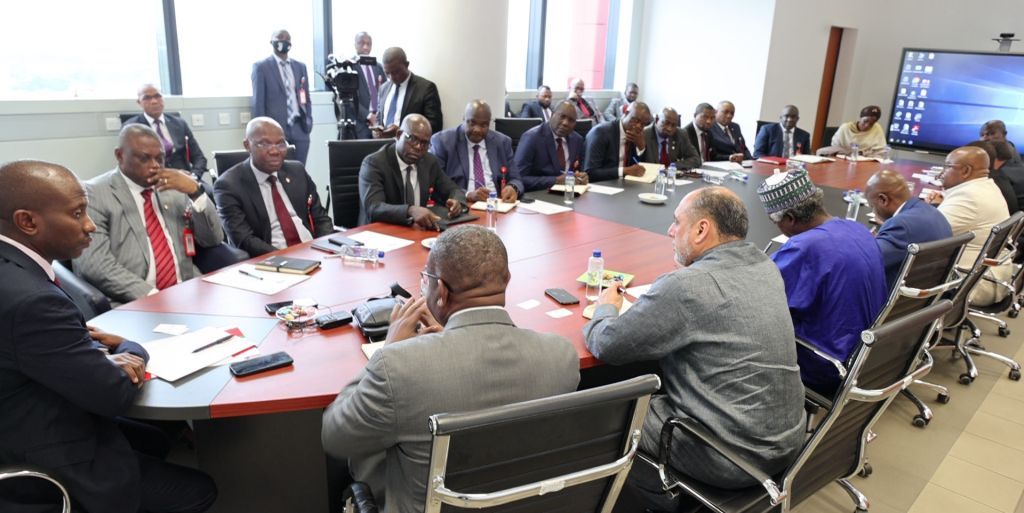
Acting-Chairman of the Economic and Financial Crimes Commission, (EFCC), Abdulkarim Chukkol on Wednesday, July 26, 2023, reiterated the Commission’s commitment to working with other law enforcement organizations in Africa in tackling the menace of cybercrime, money laundering and other economic and financial crimes.
Chukkol stated this at the EFCC Headquarters, when a senior delegation from the Directorate of Priority Crime Investigation, (DPCI), of South Africa, led by Lieutenant General CS. Mosipi visited the Commission.
He stated that the EFCC is honoured to receive the delegation as a significant step “towards fostering a deeper understanding and collaboration between our esteemed agencies”.
“The EFCC actually recognizes the track record and unwavering commitment demonstrated by your organization, the DPCI, most especially in prioritizing and combating serious crimes that threaten the fabric of our societies. As we all gather here today, united by our shared mission to safeguard our nations from the clutches of economic and financial crimes, we recognize the crucial role that knowledge exchange and cooperation play in strengthening our collective efforts. These challenges that we face are quite complex and multifaceted requiring a holistic and collaborative approach,” he said.
Chukkol added that the EFCC places a premium on cooperation and collaboration with law enforcement and anti-corruption agencies in Africa. “So, collaboration with agencies like yours will go a long way in addressing some of the challenges we face in our continent.
“Through open and transparent sharing of intelligence, strategies and methodologies we can bolster our capabilities and enhance our resilience in the face of evolving criminal tactics,” he said.
On his part, DPCI’s Lieutenant General Mosipi stated that the delegation was in the Commission to develop new pathways in tackling economic and financial Crimes issues and other related offences bedeviling the society. He called for collaboration and cooperation between both agencies and the implementation of the existing law enforcement Memorandum of Understanding, MoU, between Nigeria and the Republic of South Africa
“Within the DPCI we deal with serious economic and financial crimes; there is a section that deals with that and we equally deal with drugs, there is a section that deals with that.
“We are happy to be here and we hope that when we leave here we will have a way forward, we know exactly what we want to do and how we want to do it and we can from this table, get the capacity to deal with those things,” he said.
Source: Guardian