Introduction
Illegal mining has emerged as a significant global concern, with devastating consequences for the environment and national security. In countries like Nigeria, Colombia, and South Africa, to mention a few, illegal mining has reached alarming proportions, posing grave threats to natural resources, economic stability, and the social fabric. This article explores the issue of illegal mining as a transnational organized crime in Nigeria with reference to other jurisdictions, highlighting its multifaceted implications and the urgent need for comprehensive action toward a sustainable solution.
Understanding Illegal Mining as a Transnational Organized Crime
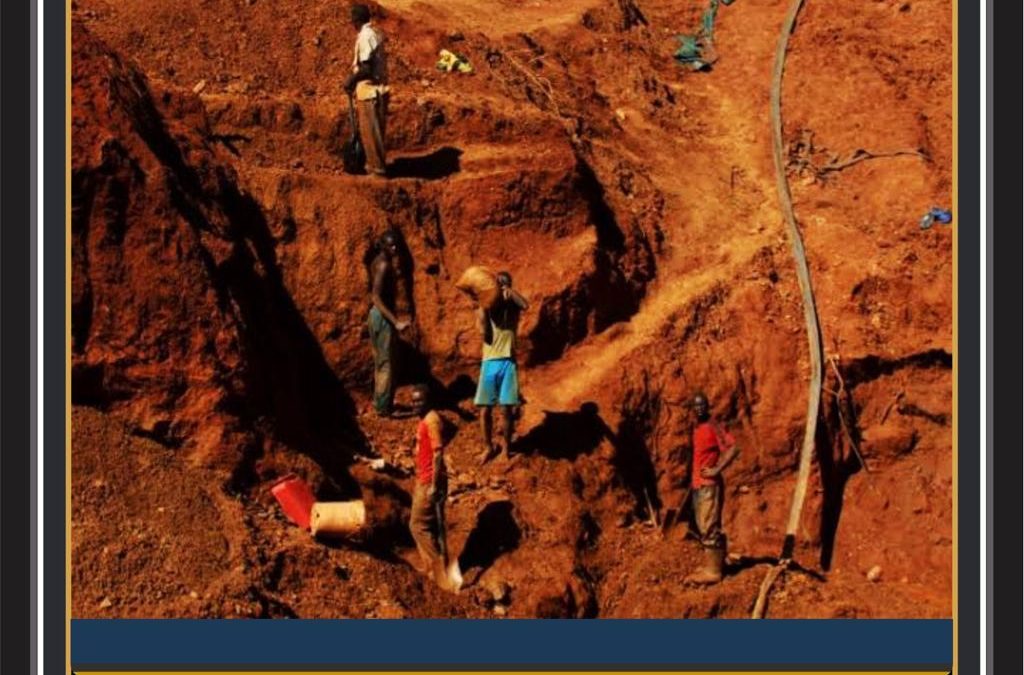
Illegal mining usually in the form of artisanal and small-scale mining (ASM), refers to mining activities conducted without the required licenses, permits, and adherence to environmental and safety regulations. When illegal mining activities are organized, coordinated, and driven across national borders with the involvement of criminal networks, it becomes a transnational organized crime. It involves foreign countries, networks, and actors working to achieve specific objectives, often for financial gain. In the case of illegal mining, transnational criminal networks exploit weaknesses in governance, border control, and law enforcement to conduct illicit mining operations, smuggling, money laundering, and tax evasion on an industrial scale.
Also, this category of crime has a direct impact on the environment. Illegal mining activities have led to rampant resource depletion, ecological degradation, and biodiversity loss. The unregulated extraction methods employed by illegal miners often result in deforestation, soil erosion, pollution of water bodies, and destruction of wildlife habitats. These activities undermine the country’s ecological balance and threaten the livelihoods of communities dependent on these resources. Therefore, environmental crime is a collective term for “illegal activities harming the environment and aimed at benefiting specific individuals, groups or companies through the exploitation and theft of, or trade in natural resources”.
The enormous negative impact of illegal mining and exploitation on several countries recently led to it being classified as the fourth largest criminal sector worldwide, after drugs, counterfeit goods, and trafficking.
Illegal Mining in Nigeria and Africa
Africa’s artisanal and small-scale gold mining sector has enormous development potential. However, it is undermined by criminals profiting from it at the expense of vulnerable populations. In recent years, there has been an increased nexus between escalated insecurity and mining activities in some Nigerian states, such as Zamfara, Plateau, and Osun State. This is despite earlier efforts taken by the federal and some state governments to curb the menace. It will be recalled that sometime in January 2019; the federal government banned mining activities in Zamfara state and constituted an anti-illegal mining team to enforce compliance. The Zamfara state government complemented this move and established an anti-illegal mining committee. Unfortunately, this move was short-lived as these illegal activities continue till present and have resulted in escalated insecurity.
In addition to this is the growing presence of the Chinese in various economic activities in Nigeria including illegal mining of gold and other solid minerals. These illegal mining activities have been linked to Chinese nationals’ sponsorships and funding. A news report according to the Nigerian Tribune reveals some sort of collaboration between some ‘Nigerians in high positions of authority’ and Chinese corporations in illegally mining gold, thereby driving rural banditry and violent local conflicts in some parts of Nigeria, mainly the North West, North Central and South West regions because of its strategic importance and economic value. The Zamfara state governor in the year 2000 announced the arrest of some Chinese citizens for their involvement in illegal mining activities. Although the Chinese government denied the allegation, the truth of the allegation is not far-fetched.
The “Mountain Boys” case in South Africa illustrates a similar alarming complexity. The criminal syndicate smuggled vast amounts of precious metals, mainly platinum, which were stolen from South Africa’s mines. To operate successfully, the criminals bribed their way through the enforcement agencies such as the Police. They also deployed a sophisticated network of armed men to guarantee their unimpeded exploration and exportation of precious metals to refineries in Western Europe and North America. When accosted by custom officials, they made representations that undervalued and falsified the nature of the consignment, thereby circumventing the requirement for prescribed permits and licenses to possess and deal in precious metals.
While illicit mining and trafficking of precious metals and minerals is an issue of global concern, the question is why is this crime on the increase in Nigeria and Africa, and what are the underlying enabling forces? A detailed analysis reveals that these activities are not carried out in isolation. The harsh reality is that some collaboration exists between the criminals and the law enforcement agencies. Although this collaboration comes in different forms, while some are intentional & voluntary, others are induced.
Also, illiteracy and poverty are two major factors that enable illegal mining. The rural communities where these activities occur in Nigeria are impoverished. For example, in the North Western region, the local populations carry out an estimated 80% of all mining illegally and artisanally, thus, the people become vulnerable and available tools in the hands of the cartels as a means of survival. Another major factor one can point to in some African countries is the overwhelming power and arms controlled by these syndicates, whereby whoever stands in their way will be risking their lives.
The Impact of Illegal Mining in Nigeria
In light of the above, there is no doubt that illegal mining activities have several implications on Nigeria in terms of economic impact, revenue loss and national security.
Illegal mining deprives the Nigerian government of substantial revenue that could be generated through legitimate mining operations. The absence of taxation and royalties from unlawful mining activities exacerbates the precarious economic situation on the country. Moreover, the competition between illegal miners and licensed mining companies creates an uneven playing field, discouraging potential investors and undermining the growth of the formal mining sector.
As a transnational organized crime, illegal mining has profound implications for national security. The presence of criminal networks involved in illegal mining contributes to a range of security challenges, including money laundering, arms trafficking, and the financing of other criminal activities such as terrorism and drug trafficking. The erosion of state control in mining areas also leads to increased lawlessness, social unrest, and conflicts over resource control, further destabilizing affected regions.
Recommendations for Addressing the Challenge
To effectively tackle illegal mining as a transnational organized crime in Nigeria, a multi-dimensional approach is necessary by exploring the following measures:
- Honesty of Purpose: The need for true political willpower and sincerity of purpose by the federal government, state government and regulatory agencies involved in enforcing legal and licensed mining goes to the root of every other action that needs to be taken to ensure that the problem is resolved in totality. The mindset of the enforcement bodies needs to be reformed towards maintaining an unwavering dedication to promote honesty and focus. This crucial factor will foster trust, integrity, and compliance.
- Strengthening Legal Frameworks: The 1999 Constitution of the Federal Republic of Nigeria (as amended), the Nigerian Minerals and Mining Act, 2007, and the Nigerian Minerals and Mining Regulations, 2011 are the three principal laws regulating mining activities in Nigeria. There is a need to enhance the existing legislation and regulatory frameworks to address the specific challenges posed by illegal mining; ensure stricter penalties for offenders and streamline coordination between relevant government agencies. Other laws governing the Nigerian mining sector include the Land Use Act of 1978, the Companies and Allied Matters Act of 2020, the National Environmental Standards and Regulations Enforcement Agency (Establishment) Act of 2007, the Environmental Impact Assessment Act, Mines and Quarries (Control of Building etc.) Act, Explosives Act, and Foreign Exchange (Monitoring and Miscellaneous Provisions) Act, amongst others.
- Enhancing Border Security and Surveillance: To curb the cross-border movement of illegal miners, smuggled minerals and illicit proceeds, there is need to improve border control mechanisms. Promoting international cooperation to disrupt transnational criminal networks involved in illegal mining would go a long way in addressing this global concern.
- Strengthening Law Enforcement: by providing adequate training and resources to law enforcement agencies responsible for combating illegal mining, they are better positioned to address the challenges head on. To further strengthen law enforcement, multi-agency collaboration and inclusiveness should be encouraged between law enforcement, environmental agencies, and local communities to gather intelligence and apprehend those involved in illegal mining.
- Promoting Responsible Mining Practices: Encourage the formalization of artisanal and small-scale mining by providing legal support, technical assistance, and access to finance. Promote sustainable mining practices that prioritize environmental protection and community engagement.
- Public Awareness and Education: Conduct targeted awareness campaigns to educate local communities, miners, and relevant stakeholders about the negative impacts of illegal mining. Encourage community participation and support in reporting illicit mining activities to the authorities.
Conclusion
Addressing illegal mining as a transnational organized crime requires concerted effort from the government, law enforcement agencies, local communities, and international partners. By implementing the suggested measures, Nigeria can protect its natural resources, boost economic development, and ensure national security. Only through such comprehensive action can the negative impact of illegal mining be mitigated, allowing Nigeria sustainably harness its mineral wealth for the benefit of its people and protect its environment.